Heat is a Byproduct of All Metabolic Processes
Table 53-1 shows the amount of heat produced by the metabolism of carbohydrates, fats, and proteins. The basal metabolic rate (BMR) is the rate of energy metabolism measured under minimal stress while the animal is fasting.
BMR is greater in homeotherms than in poikilotherms because homeotherms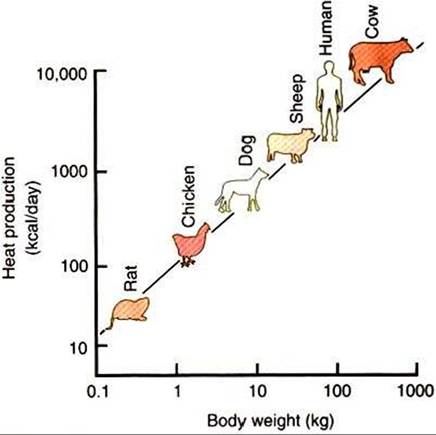
FIGURE 53-2 Relationship between body weight and heat production.
Table 53-1
Amount of Heat Produced by Metabolism of Major Food Types
| Food type | Heat production (kcal∕g) | ||
| Per gram of food | Per liter of O2 consumed | Per liter of CO2 produced | |
| Carbohydrates | 4.1 | 5.05 | 5.05 |
| Fat | 9.6 | 4.75 | 6.67 |
| Proteins (to urea) | 4.2 | 4.46 | 5.57 |
need to generate heat to maintain body temperature. The BMR per kilogram of body weight is greater in smaller than in larger mammals (Figure 53-2). This is necessitated partly by the greater surface/volume ratio of smaller animals. The relatively greater surface area per kilogram body weight of small animals provides a larger area for heat loss.
More on the topic Heat is a Byproduct of All Metabolic Processes:
-
Veterinarian -