Cardiac Output Equals Heart Rate Multiplied by StrokeVoIume
All the events diagrammed in Figure 21-1 occur during each heartbeat, and each heartbeat results in the ejection of one stroke volume of blood into the pulmonary artery and aorta.
The number of heartbeats per minute is called the heart rate. Therefore, cardiac output (the total volume of blood pumped by each ventricle in 1 minute) equals stroke volume multiplied by heart rate. Cardiac output can be increased only if heart rate increases, stroke volume increases, or both increase. Therefore, to understand how the body controls cardiac output, you must understand how the body controls heart rate and stroke volume. Figure 21-2 summarizes the factors that affect heart rate and stroke volume. These factors are described in detail in the following three sections.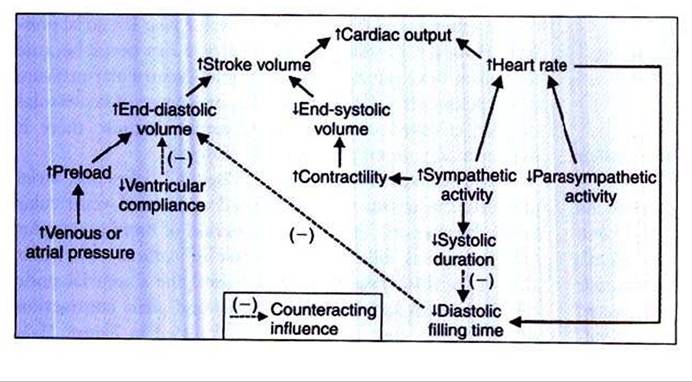
FIGURE 21-2 Summary of the control of cardiac output. The relationships shown here are described in detail in the text.
More on the topic Cardiac Output Equals Heart Rate Multiplied by StrokeVoIume:
-
Veterinarian -