Conformation varies much more considerably in dogs than in other domesticated species.
The preferences of fanciers have produced a variety of breeds that are strikingly different from one another and from their common wolf ancestor. The current popularity of purebred cats has increased awareness of the variation among breeds, even if the differences are much less considerable than among dogs.
In both species this variation is nowhere better expressed than in the head.The appearance of the dog's head is largely determined by the shape of the skull, the position and size of the eyes, and the form and carriage of the ears. The ears may be held erect, hang from the side, or have an intermediate carriage that is erect at the base and pendulous toward the tip. Certain differences are permanent attributes of a breed, but others are no more than temporary expressions of mood.
The skull of the adult dog is characterized by a well-developed facial part, large orbits and temporal fossae, incomplete postorbital bars, prominent tympanic bullae, and the absence of supraorbital foramina. It is widest behind the eyes, where the zygomatic arches are widely spread. Breed differences in the skull largely relate to the relative length of the facial part. Dolichocephalic, brachycephalic, and mesaticephalic or mesocephalic (long, short, and intermediate head length, respectively) breeds are recognized (Fig. 11.1). In dolichocephalic breeds like the Greyhound, the head is long and narrow. The dorsal surfaces of nose and cranium form two nearly parallel planes that are divided at the level of the eyes by a break (nasofrontal angle or stop) where the cranium descends to the level of the nose. The long facial part is often accompanied by an underbite jaw (brachygnathism). The external sagittal crest is well developed for attachment of the temporal muscles, and the zygomatic arches project less than in the other groups. In brachycephalic breeds, like the English Bulldog and the Pekingese, the facial part is short and the cranium wide and globular.
The stop is pronounced, and the dorsal surface of the cranium is convex and has a much reduced external sagittal crest. In some breeds the fontanelles remain open throughout life. Numerous skin folds mark the face, and the eyes are widely spaced. Brachycephalic breeds are most often prognathic—the term indicating that the lower jaw protrudes in front of the upper jaw (Fig. 11.1C). Most breeds belong to the mesaticephalic type, in which the length of the skull is more harmoniously proportional to its width.The face of the dog is more expressive of emotion than that of other species, able to indicate aggressive intent (Fig. 11.2), submission, and pain, even if unable to particularize them. Age is also clearly revealed in dogs of pigmented coat by a "graying" that begins at the upper lip and later spreads, reaching the area around the eyes by about the eighth year or a little later (Fig. 11.3).
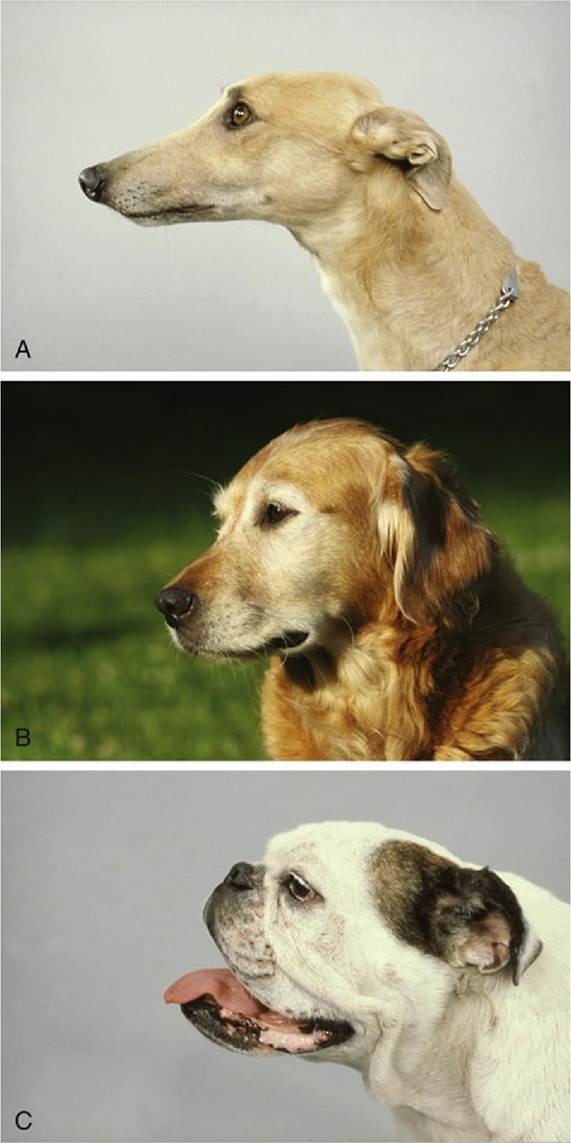
FIG. 11.1 Representatives of (A) dolichocephalic, (B) mesaticephalic, and (C) brachycephalic breeds.
Redundancy of facial skin is a feature of several breeds such as the Bulldog, Shar-Pei (Fig. 11.4), and Bloodhound. In extreme form it may result in frontal folds that obscure the vision, and because the upper eyelid is turned inward (entropion), it may irritate the cornea through contact with hairy skin.
In cats, in contrast to the breeds of dogs just mentioned, the skin on the scalp is tight and barely sufficient to close large wounds. The cat's head also exhibits features distinctive of breed or type. In most cats the face is relatively short, but in certain Oriental breeds, especially the Siamese, it is proportionally longer and the whole head is more wedge-shaped with a less pronounced stop. In contrast, Persian cats have very short "pushed-in" faces; when exaggerated, this trait may be associated with blockage of tear ducts, leading to persistent weeping (Fig.
11.5). The eyes and orbits are relatively large and face more directly forward than those of dogs, providing a wider field of binocular vision (see Fig. 9.1). The ears are wide at the base and are carried erect, except in the Scottish Fold, in which the distal part of the pinna flops. The contrast between the rather short, rounded ears of most European breeds and the larger pointed ears of the Oriental has little practical importance but contributes much to breed "character." Tactile hairs (whiskers) are prominent (see Fig. 10.11).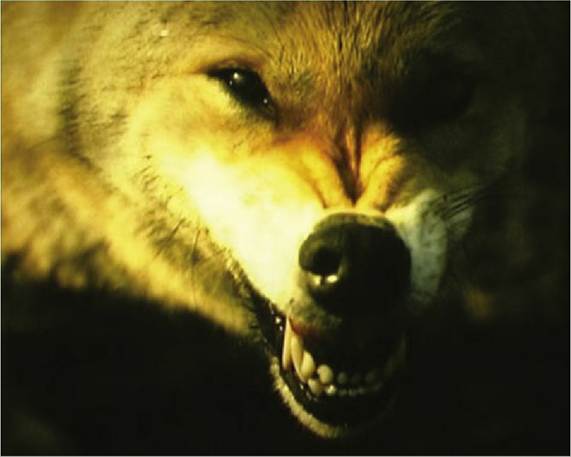
FIG. 11.2 Clear sign of aggressive intent of a dog.
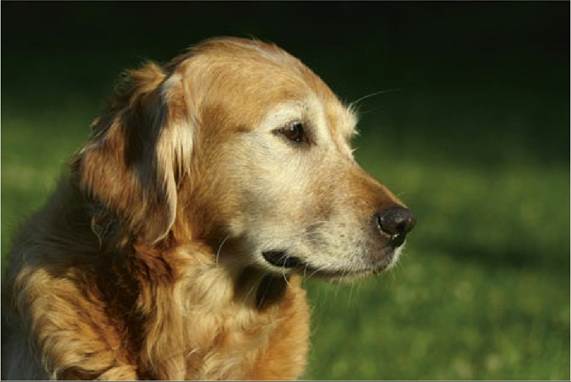
FIG. 11.3 Graying beginning at the upper lip and around the eye.
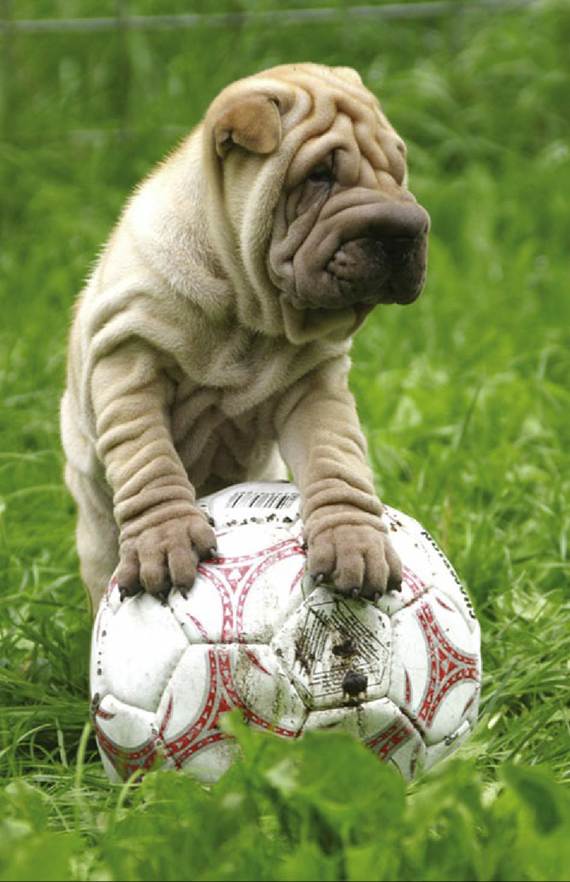
FIG. 11.4 Redundancy of skin in a Shar-Pei.