Diarrhea OccursWhen There Is a Mismatch Between Secretion and Absorption
The amount of water in the feces is the result of the balance between secretion and absorption. Malabsorptive diarrhea occurs when absorption is inadequate to recover a sufficient portion of secreted water» as illustrated in Figure 30-29» C.
Malabsorptive diarrhea usually occurs because of the loss of GI epithelium. In most instances, such losses occur because of viral» bacterial, or protozoal infections. Viral infections often cause particularly severe destruction of villous epithelium. These infections result in the loss of enterocytes from the villi. As noted previously» villous length is determined by the relative rates of cell loss and cell replacement (Figure 30-30).Intestinal infections result in decreased villous length because the rate of cell loss is higher than the rate of cell replacement. Short villi cause impaired absorption for two reasons: (1) there is an absolute loss of absorptive intestinal surface area and (2) the cells that are lost are the mature cells from the upper regions of the villi. It is these mature cells that possess the enzymes of membranous-phase digestion and the transport proteins for sodium co-transport; loss of these cells results in impairment of digestion and absorption of nutrients. Because nutrient absorption is necessary for the osmotic absorption of water, water absorption is diminished when nutrient absorption is impaired.
Secretory diarrhea occurs when the rate of intestinal secretion increases and overwhelms the absorptive capacity. Most cases of hypersecretory diarrhea result from inappropriate secretion from the small intestinal crypts. This occurs when the normal secretory mechanism of the crypt epithelium (as discussed earlier) is abnormally stimulated. Toxins known as enterotoxins are produced by some types of pathogenic bacteria. These toxins bind to enterocytes and stimulate adenyl cyclase activity and the production of cAMP within the cells, resulting in opening of the chloride gates and the secretion of water and electrolytes from crypt epithelium.
If the stimulation is mild, the gut may respond with an increase in absorption, and diarrhea does not result. However, when the secretion exceeds the capacity of the gut to increase absorption, as illustrated in Figure 30-29, B, diarrhea results. Hypersecretory diarrhea has devastating effects on the water, electrolyte, and acid-base status of animals, especially neonates. Hypersecretory diarrhea caused by enterotoxin-producing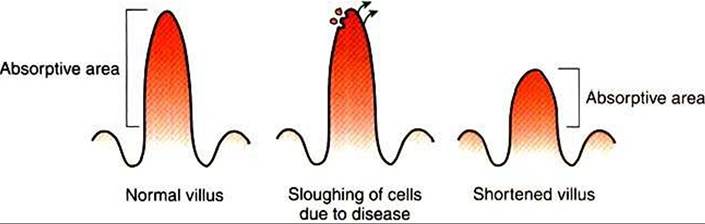
FIGURE 30-30 Shortening of villi caused by increased cell loss. Many infectious diseases result in an increased rate of cell sloughing from the villi. As cells are lost, the villus shrinks to fill in the gap in the epithelial coat. If villous height is to be maintained in the presence of rapid loss of enterocytes, the rate of recruitment of new cells, generated in the crypts, must be increased. Therefore, when the rate of cell loss exceeds the capacity for cell replacement, shortened villi with reduced absorptive surfaces and relatively immature enterocytes appear.
Escherichia coli is an extremely common disease of neonatal calves and pigs. This disease causes large economic losses in the cattle and swine industries as a result of treatment costs and death.