FUNCTIONS OF THE KIDNEY
1. Maintenance of homeostasis: The kidney plays a major role in maintaining homeostasis through the following methods:
i. Excretion of waste products such as urea (end product of amino acid metabolism), uric acid (end product of nucleic acid metabolism), creatinine (end product of metabolism in muscles), bilirubin (end product of hemoglobin degradation).
Kidneys also excrete harmful foreign chemical substances such as toxins, drugs, heavy metals, pesticides, etc.ii. Maintenance of water balance: Water balance is maintained according to the requirements of the animals
iii. Maintenance of electrolyte balance: Electrolyte balance is done by the kidney to keep the ratio of important ions in proportion.
iv. Maintenance of acid-base balance: acid base balance is one of the most important function that kidney is performing in the body.
2. Hemopoietic function: heamatopoietic function is performed by release of certain hormones like erythropoietin and thrombopoietin.
3. Endocrine function: kidney releases different hormones like erythropoietin, thrombopoietin, Renin, 1,25-dihydroxycholecalciferol (calcitriol) and Prostaglandins which having diverse role in maintaining water and electrolyte balance.
4. Regulation of blood pressure is done by regulating the volume of ECF, through renin-angiotensin mechanism
5. Regulation of blood calcium level by activating 1,25-dihydroxycholecalciferol into vitamin D and Vitamin D is necessary for the absorption of calcium from intestine
168
DOI: 10.1201/9781003426851-18
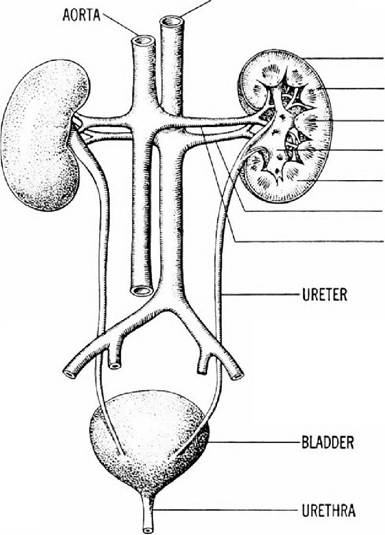
FIGURE 18.1 The renal system in mammals
18.4