Metabolic Control of Blood Flow Is a Local MechanismThat Matches the Blood Flow of a Tissue to Its Metabolic Rate
Metabolic control of blood flow is the most important local control mechanism. For example, metabolic control accounts for the huge increase in blood flow through a skeletal muscle as it goes from rest to maximal exercise.
The functional significance of metabolic control of blood flow is that it matches the blood flow in a tissue to the metabolic rate of the tissue. An increase in tissue blood flow in response to increased metabolic rate is called active hyperemia (hyper means “elevated," ettιia refers to blood, and “active" implies an increased metabolic rate).Metabolic control of blood flow works by means of chemical changes in the tissue. When the metabolic rate of a tissue increases, its consumption of oxygen increases, with an increased rate of production of metabolic products, including carbon dioxide, adenosine, and lactic acid. Also, some potassium ions (K+) escape from cells and end up in the interstitial fluid. Therefore, as the metabolism of a tissue increases, the interstitial concentration of oxygen decreases, and the interstitial concentrations of metabolic products and K+ increase. All these changes have the same effect on arteriolar smooth muscle: they relax it (Table 24-1). The arterioles dilate, and vascular resistance decreases; more blood flows through the tissue.
Low levels of oxygen and high concentrations of metabolic products and K+ also cause relaxation of the precapillary sphincters (in the tissues that have them), and this opens more of the capillaries in the tissue to blood flow. As explained in Chapter 23, the opening of more capillaries decreases the diffusion distance between fresh, oxygenated blood and the metabolizing cells of the tissue. Opening more capillaries also increases the total capillary surface area for diffusional exchange. The net result of the increased blood flow, the decreased diffusion distance, and the increased total capillary surface area is a more rapid delivery of oxygen and other metabolic substrates to the tissue cells and a more rapid removal of metabolic waste products from the tissue.
Table 24-1
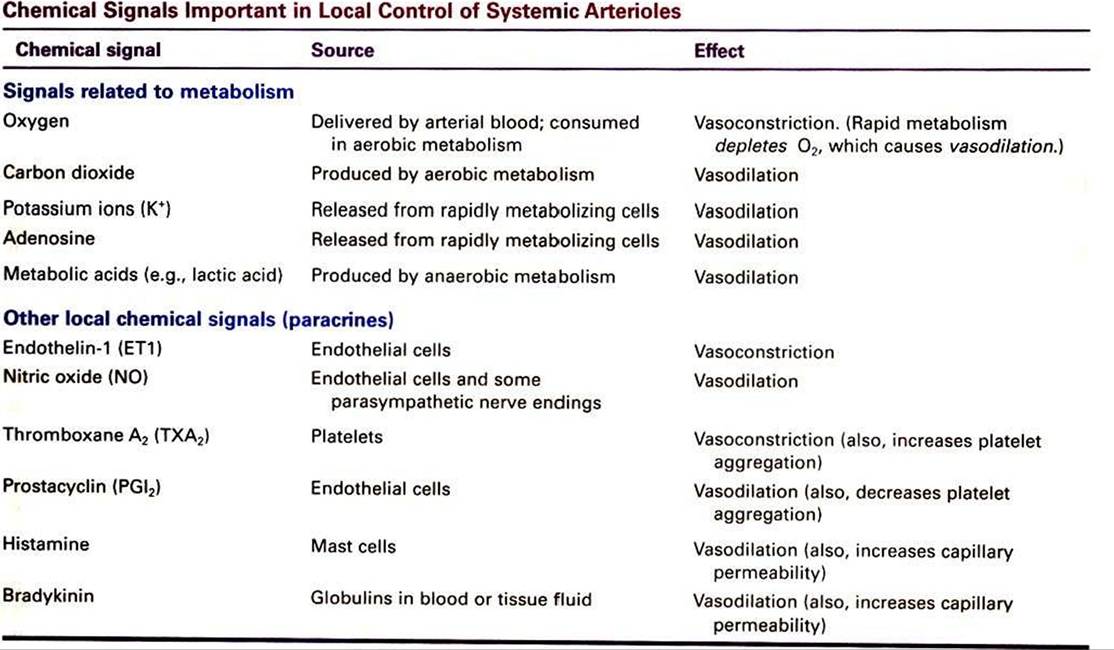
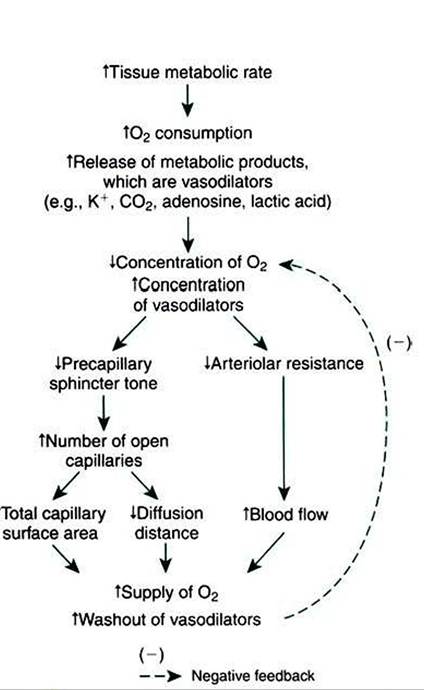
RGURE 24-1 Metabolic control of blood flow is a local (intrinsic) mechanism that acts within a tissue to match blood flow to the metabolic rate. As a tissue becomes more active metabolically, the metabolic control mechanism increases blood flow and thereby regulates the concentration of oxygen and metabolic products in the tissue.
Metabolic control of blood flow involves negative feedback. The accumulation of metabolic products and the lack of oxygen initiate vasodilation, which increases blood flow. The increased blood flow removes the accumulating metabolic products and delivers additional oxygen. A new balance is reached when the increased blood flow closely matches the increased metabolic needs of the tissue. Figure 24-1 summarizes the major features of metabolic control of blood flow.
Reactive hyperemia is a temporary increase above normal in the flow of blood to a tissue after a period when blood flow was restricted. In this case the hyperemia (increased flow) is a response (reaction) to a period of inadequate blood flow. Mechanical compression of blood vessels is one cause of inadequate blood flow. One can easily demonstrate reactive hyperemia in nonpigmented epithelial tissue; for example, press a finger against nonpigmented skin hard enough to occlude the blood flow; maintain the pressure for about I minute, and then release. The previously compressed area of skin looks darker (redder) for a short time because blood flow becomes greater than normal when the compression is released.
The same metabolic control mechanisms that account for active hyperemia also explain reactive hyperemia. During the period of restricted blood flow, metabolism continues in the compressed tissue, so metabolic products accumulate, and
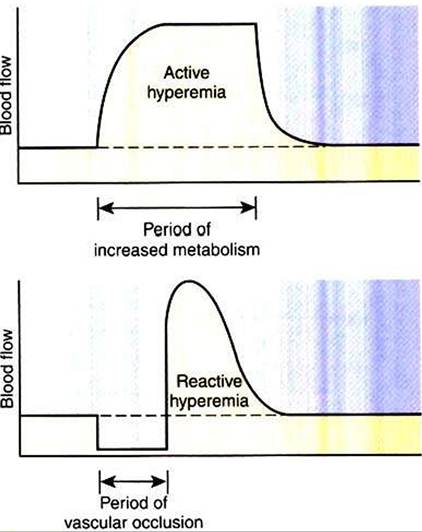
FIGURE 24-2 Both active hyperemia and reactive hyperemia involve increases above normal in blood flow, and both are brought about by the same mechanisms for the local, metabolic control of blood flow.
the local concentration of oxygen decreases. These metabolic effects cause dilation of the arterioles and a decrease in arteriolar resistance. When the mechanical obstruction to flow is removed, blood flow increases above normal until the ‘oxygen debt” is repaid and the excess metabolic products have been removed from the compressed tissue. Figure 24-2 compares active and reactive hyperemia.