» Miscellaneous Clinical Notes
Congenital developmental problems are fairly common in camelids. Readers interested in a complete discussion of congenital defects seen in llamas and alpacas, especially as they relate to heritability, are referred to Fowler's Medicine and Surgery of Camelids.
• The most common congenital disorder of llamas and alpacas involves the development of the mandible, which can either be too long or too short, causing the incisor teeth to not meet the dental pad properly. Cleft palate, or complete palatal agenesis, can both occur.
• A potential impediment to airflow in the newborn is congenital choanal atresia, usually identified when the cria (baby llama or alpaca) exhibits dyspnea or inability to nurse. Affected animals will often stand with the head extended, nostrils flared, and mouth open. In affected animals, a soft rubber catheter passed through the ventral meatus will not advance farther than the medial canthus.
• Several congenital eye abnormalities are reported in llamas and alpacas.
• Atresia of any part of the gastrointestinal tract can occur in any species, but crias are more frequently affected with congenital atresia ani than are neonates of other species.
• Aplasia or atresia of portions of the female reproductive tract is not uncommon. Pseudohermaphroditism, with female external genitalia but an enlarged clitoris, can occur but is infrequent. Supernumerary teats occur in 17% of llamas and 6% of alpacas.
• Camelids can also be afflicted with ligament laxity, flexural deformities, and angular limb deformities.
The normal temperature of llamas and alpacas is between 99.5° and 102°F but can be as high as 104°F in extreme heat, in which case exertion may cause heat stress. The heart rate varies between 60 and 90 beats/min, and respiratory rates are in the range of 10 to 30 breaths/min. The pulse can be taken using the saphenous artery in the middle of the thigh, being careful to approach gradually and to avoid contact with the lower leg, as these animals usually resent handling of the lower limbs.
The preferred sites for intramuscular injections are the caudal neck, semimembranosus, semitendinosus, or triceps brachii muscles. The practitioner should keep in mind that the musculature of the neck is sparse and the vertebral column is relatively close to the surface of the neck as compared to other species.
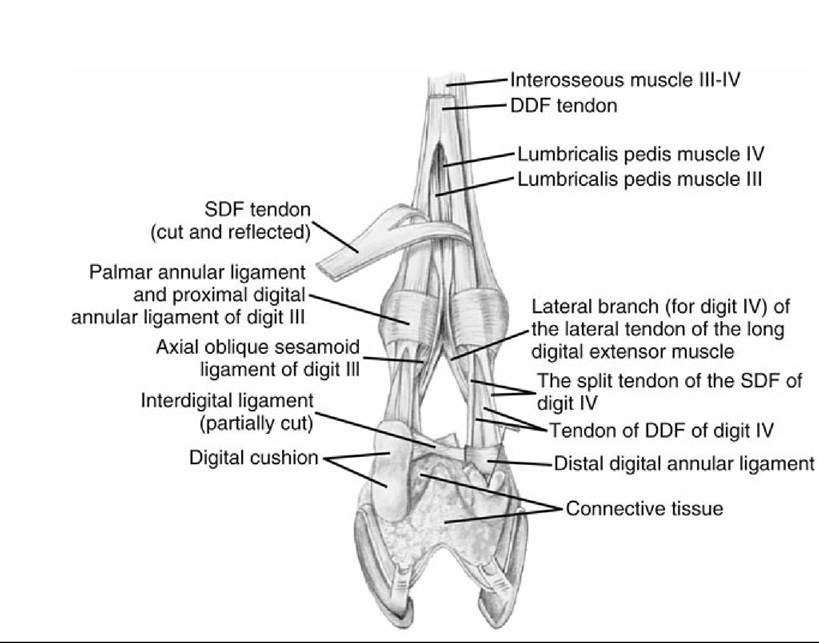
FIG. 38.41 Distal left pelvic limb of the llama with the superficial digital flexor (SDF) tendon reflected to reveal the emergence of the lumbricalis muscles at the bifurcation of the deep digital flexor (DDF) tendon. (From Cebra C, Anderson DE, Tibary A, et al: Llama and alpaca care: medicine, surgery, reproduction, nutrition, and herd health, St. Louis, 2014, Elsevier, Fig. 58-8.)
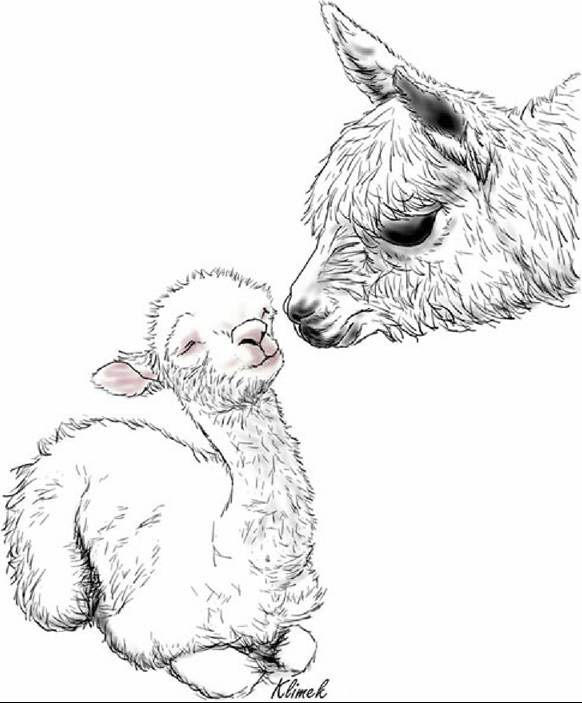
FIG. 38.42 Alpaca cria in the “cush” position.
Sites for venipuncture include the jugular vein, the medial saphenous vein at the stifle in laterally recumbent patients, the middle coccygeal vein on the ventral surface of the tail, and veins on the pinna of the ear. The right jugular vein is preferred to avoid damage to the esophagus.
Intravenous catheterization can be done using the jugular, cephalic, lateral saphenous, lateral thoracic, or auricular veins. Of note, one report based on dissections indicated that the lateral saphenous vein is absent in the llama, but this contradicts clinical sources. The femoral artery can be catheterized for arterial blood sampling and blood pressure monitoring. It is also possible to place a cannula in the medullary cavity of the femur.
The veins of the distal limb can be used for regional intravenous anesthesia. After application of a tourniquet, any palpable vein can be catheterized for this procedure, with the dorsal common digital being commonly used. The lateral saphenous vein or the cephalic vein in the forelimb may also be used.
Some clinicians note that the thick skin on the distal limbs makes placement of a catheter difficult in the veins of the distal limb.Camelids rest in the "cush" position, as seen in the cria in Fig. 38.42, with forelimbs and hindlimbs tucked under them in a sternal position. The cush position is an effective position for restraint and handling for certain procedures. They will also lie down in lateral recumbency for deep sleep.
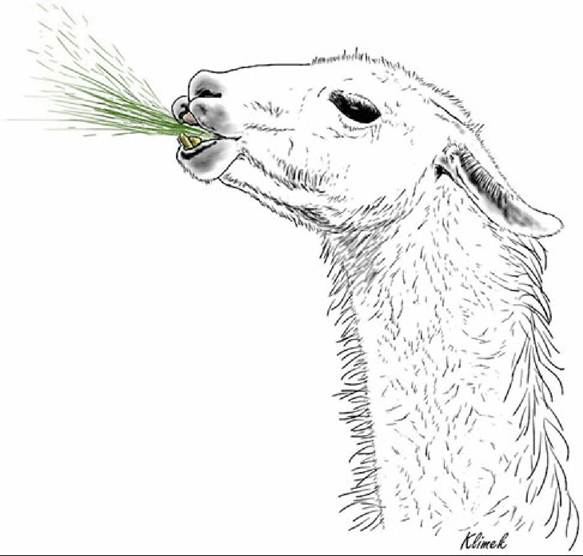
FIG. 38.43 Illustration of the aggressive posture of the head and neck that accompany spitting in the camelid.
The red blood cell of the camelid is oval shaped and relatively small, and the packed cell volume is higher than for other species. White blood cells are not significantly morphologically different from those of other species, but the leukocyte count is higher than in other species. The neutrophillymphocyte ratio is similar to that of the horse, and most of the cells are neutrophils. Llamas and alpacas have been reported to have a higher eosinophil count than other species, but this has not been correlated to parasite counts. Fowler's Medicine and Surgery of Camelids contains reference values for blood parameters of llamas and alpacas.