Respiration Is Regulated to Meet the Metabolic Demands for Delivery of Oxygen and Removal of Carbon Dioxide
During its daily activities, an animal varies its level of activity and can breathe air of varying composition and purity. To allow the respiratory system to respond to these different challenges, control mechanisms monitor (1) the chemical composition of the blood, (2) the effort being exerted by the respiratory muscles on the lungs, and (3) the presence of foreign materials in the respiratory tract.
This information is integrated with the other Iionrespiratory activities, such as Ihermoregiilalion, vocalization, parturition, and eructation, to produce a pattern of breathing that maintains gas exchange.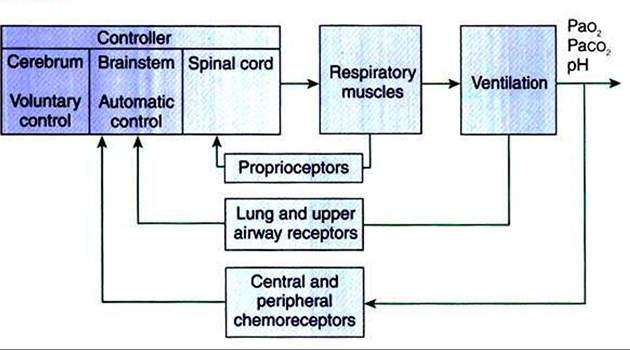
FIGURE 49-1 Feedback control diagram for the regulation of ventilation.The controller, which includes centers in the cerebrum and brainstem, drives the respiratory muscles that bring about ventilation. Changes in ventilation can cause changes in blood gas tensions (Po2, Paco2) and pH that are monitored by central and peripheral chemoreceptors. Receptors in the lung detect the stretch in the lung tissues and the presence of materials in the lungs and airways. Proprioceptors in the respiratory muscles monitor the amount of effort being applied by the muscles. Pao2, Arterial oxygen tension; Paco2, arterial carbon dioxide tension.
Figure 49-1 provides a diagram of feedback control for the respiratory system. The central controller generates the signals that regulate the activity of the respiratory muscles, which by contracting give rise to alveolar ventilation. Changes in alveolar ventilation affect blood gas tensions and pH, which are monitored by the Chetnoreceptors. These receptors send signals back to the central controller so that necessary adjustments can be made to ventilation. Mechanoreceptors in various parts of the respiratory system monitor the degree of stretch of the lungs and changes in the airways and vasculature. Stretch receptors (proprioceptors) in respiratory muscles monitor the effort of breathing.