» Size and Conformation
Alpacas weigh between 120 and 200 pounds and stand 30 to 38 inches at the withers. Fig. 38.3 shows alpacas with a handler. The llama was developed into a pack animal in addition to its use for food and fiber and is the largest of the South American camelids, roughly twice the size of alpacas.
Adult llamas weigh between 250 and 550 pounds and stand 40 to 47 inches at the withers.There are no breed standards for conformation of camelids, but general principles of balance and symmetry as applied to other livestock will work well in evaluating llamas and alpacas. The large amount of fleece can obscure details about body condition and conformation, however, as can be seen in Fig. 38.4, comparing unshorn and shorn alpacas.
In llamas, the fiber rarely extends distal to the carpus or tarsus, while it does extend onto the distal leg in the alpaca. Llamas have more variety of coat colors than do alpacas and tend to have a longer face that is not covered by fiber, whereas alpacas have a short face that typically is covered by fiber (Fig. 38.5). Alpaca ears are shorter and more rounded, while llamas have typically a banana-shaped ear that points inward.
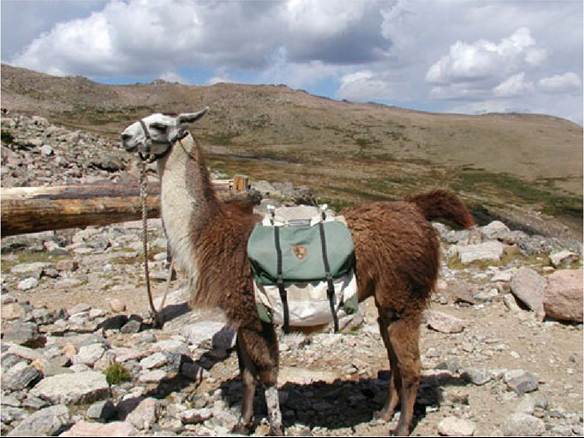
FIG. 38.1 Lloyd the llama. (Image by Richard Masoner; unmodified from original. Available at: https://commons.wikimedia.org/w/index.php?curid=3131886. This work is licensed under the Creative Commons Attribution-Sh are Alike 2.0 Generic license.)
Fig. 38.6 is a comparison of the general conformation of adult and newborn llamas and alpacas. The distribution of weight in camelids is 63% on the forelimbs and 37% on the pelvic limbs. The legs of the llama are longer than those of the alpaca, the topline is relatively straight, and the rump squarer than in the alpaca. Alpacas tend to have a slightly sickle-hocked conformation, and the pelvic structure is rotated under relative to that of the llama, giving them a "camped under" stance.
The pastern is nearly vertical in the alpaca, and it is more sloped in the llama.Camelids have a tendency to "toe out" in the forelimb. In general, however, evaluation of conformation of the trunk and limbs is similar to principles used for the horse. Llamas and alpacas should have straight legs when viewed from either the front or back; a line from the point of the shoulder should bisect the forelimb. The stance of the foot differs markedly from that of other domestic quadrupeds, in that the middle and distal phalanges are normally parallel to the ground in the camelid. For a more detailed description of the normal and abnormal conformation of the South American camelids, the reader is referred to Medicine and Surgery of Camelids, by Fowler. Angular limb deformities, especially of the carpus, occur in camelids as they do in horses. In evaluating neonatal animals, it should be noted that many animals will outgrow conformation faults such as tendon laxity if given a few weeks.
The usual gait of llamas and alpacas is a slightly broken pace. Other gaits include the walk, trot,
pace, gallop, and "pronk" or "prong" (a springing hop).
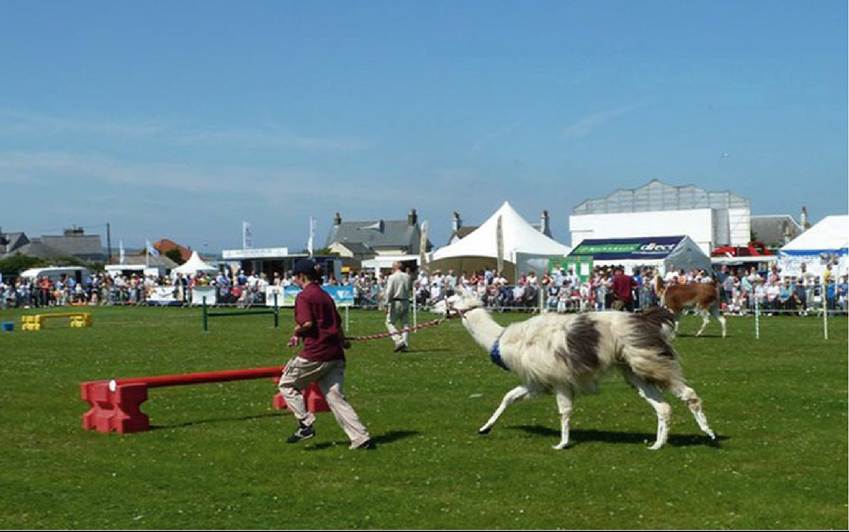
FIG. 38.2 Llama agility class, Blackrock Llama Agility Display Team. (Image by Andy Farrington; modified from original [cropped]. Available at: http://www.geog raph.org.uk/reuse.php?id=2525996 This work is licensed under the Creative Commons
Attribution-Share Alike 2.0 Generic license.)