Steroids Are Synthesized from ChoIesteroLWhich Is Synthesized by the Liver; Steroids Are Not Stored but Are Released as They Are Synthesized
Steroids represent a class of hormones that, unlike protein hormones, are lipophilic. In general, they belong to one of two categories: adrenocortical hormones (glucocorticoids,
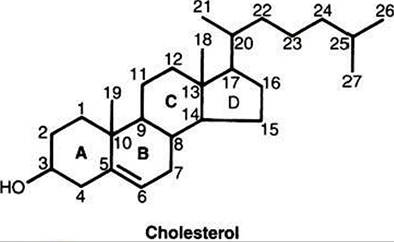
FIGURE 33-4 ■ The ring structure and numbering system of the carbon atoms in steroid hormones, illustrated for the cholesterol molecule.
(From Hedge GA, Colby HD, Goodman RL: Clinical endocrine physiology, Philadelphia, 1987, Saunders.)mineralocorticoids) and sex hormones (estrogens, progesterone, androgens). They have a common four-ring, 17- carbon skeleton that is derived from cholesterol (Figure 33-4). Although the steroids can be synthesized de novo within the cell from the two-carbon molecule acetate, the majority of steroids are formed from cholesterol, which is synthesized by the liver (Figure 33-5). Low-density lipoproteins (LDLs) enter steroid-producing cells through interaction with a membrane receptor. Cholesterol is released through the degradation of LDLs by lysosomal enzymes. Cholesterol is either used immediately for steroid synthesis or stored in granules in an ester form within the cell. The first step in the synthesis of all steroid hormones from cholesterol involves cleavage of the side chain of cholesterol to form pregnenolone; this step occurs within the mitochondrion. Subsequent modifications of the steroid molecule may occur within the mitochondrion or may involve movement to other compartments of the cell (Figure 33-6). The control of movement of steroids among cell compartments during the synthesis process is not well understood.
The type of steroid hormone that is eventually synthesized depends on the presence of specific enzymes within the particular cell. For example, only cells of the adrenal cortex contain enzymes (hydroxylases) that result in hydroxylation of the I Ith and 21st carbon molecules, a process that is essential for the production of glucocorticoids and mineralocorticoids. The pattern for sex steroid biosynthesis is for pregnenolone to be modified in a sequence that involves progesterone, androgens, and finally estrogens.
Cells that synthesize androgens (e.g., Leydig cells of the testis) have the enzymes required for the formation of pregnenolone and progesterone, as well as for the modification of progesterone to androgen, but lack the enzymes necessary to modify androgens into estrogens. Although the sex steroid-forming cells do not have enzymes that allow the formation of adrenocortical hormones, the adrenal cortex contains the enzyme systems necessary for the formation of both adrenocortical hormones and sex hormones, although the former are emphasized. As a result, the adrenal cortex normally produces small amounts of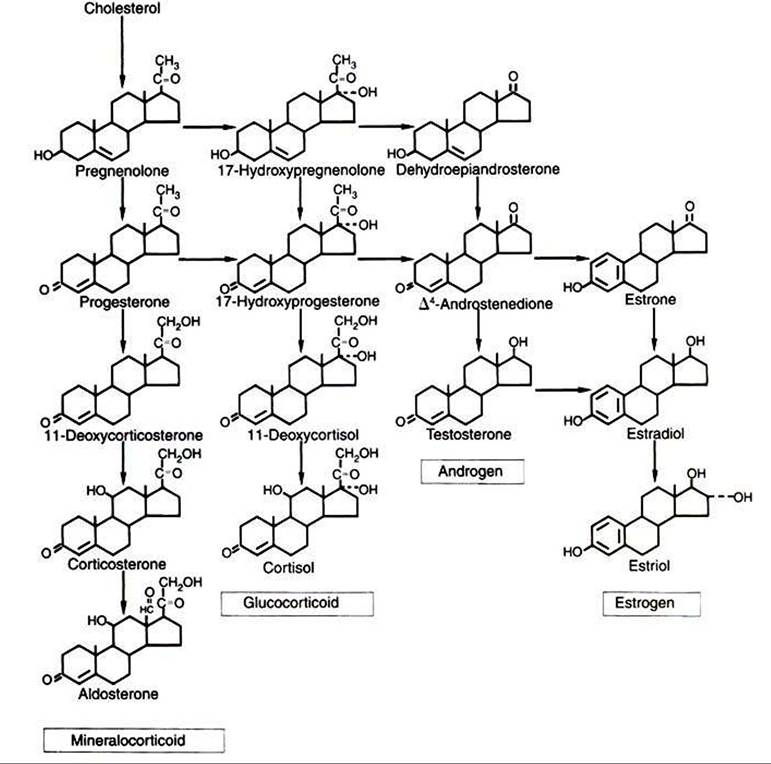
FIGURE 33-5 Pathways involved in the production of the major steroid hormones. (From Hedge GAr Colby HDf Goodman RL: Clinical endocrine physiology, Philadelphia, 1987, Saunders.)
sex steroids and produces larger amounts in certain pathophysiological conditions.
There is no provision for the storage of steroid hormones within the cell; they are secreted immediately after formation by simple diffusion across the cell membrane because of their lipophilic structure. Thus, synthesis and secretion of steroid hormones occur in a tightly coupled manner, whereby the rate of hormone secretion is controlled by the rate of synthesis.
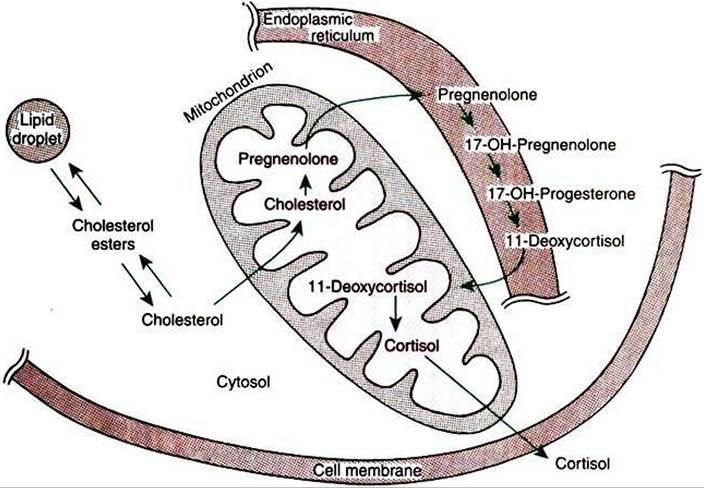
FIGURE 33-6 Subcellular compartmentalization of cortisol biosynthesis. (From Hedge GA, Colby HD, Goodman RL: Clinical endocrine physiology, Philadelphia, 1987, Saunders.)
The only storage form of steroids within these cells involves that of the precursor molecule, cholesterol, as an ester.