The Gall Bladder
The cystic duct drains bile from the gall bladder and is joined by the hepatic ducts to form the common bile duct, the passage to the duodenum. There are no valves in the bile ducts so that bile may flow in either direction.
Bile can flow via the cystic duct to be concentrated and stored in the gall bladder. The common bile duct empties into the duodenum at the major duodenal papilla, a short distance from the pylorus.The presence of food containing fat within the gastrointestinal tract stimulates the secretion of the hormone cholecystokinin (pancreozymin) by inclusion cells (specialised fibroblasts). This hormone causes contraction of the gall bladder wall and release of bile into the duodenum. The bile emulsifies fats in the ingesta, thereby facilitating absorption.
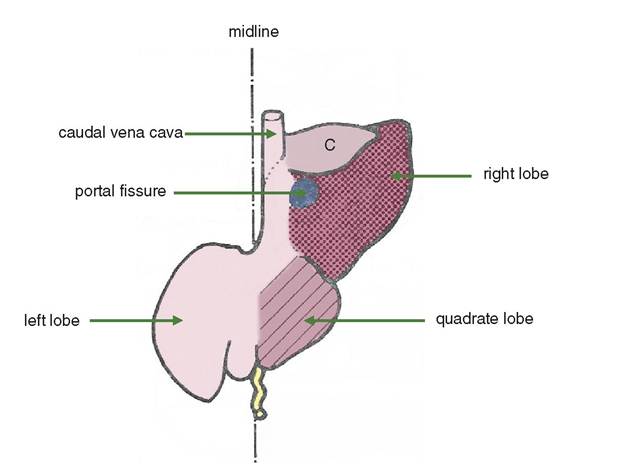
Figure 7.2 The liver of the horse. The left lobe is subdivided and the papillary lobe is absent. There is no gall bladder.
7.5
More on the topic The Gall Bladder:
-
Veterinarian -