The organs and glands of the male reproductive tract manufacture the male gamete (spermatozoon [pl. spermatozoa]) and deliver it to the female reproductive tract.
Embryologically, the reproductive system is closely related to the urinary system, developing the tubules and ducts of both interdependently. In the male adult, the urethra is a passage common to the urinary system and the reproductive tract.
The male reproductive system of mammals consists of two testes (testicles') in the scrotum, accessory organs including ducts and glands, and the penis. The testes produce spermatozoa (also called sperm) and testosterone (the male sex hormone). The scrotum provides a favorable environment for the production and maturation of spermatozoa. The remaining structures assist the spermatozoa in reaching their ultimate goal (the ovum of the female) in a condition conducive to fertilization of the ovum. These structures include the epididymis and ductus deferens, accessory sex glands (ampullary glands, vesicular glands, prostate, and bulbourethral glands), the urethra, and the penis. Figure 24-1 shows the comparative anatomy of the male reproductive organs of farm animals.
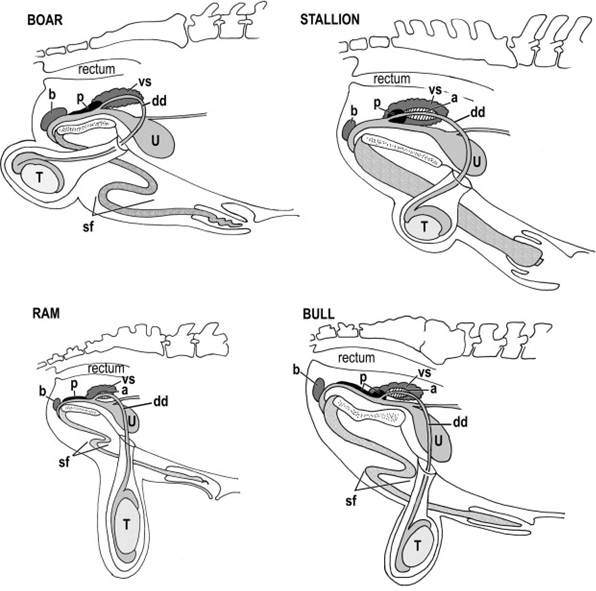
Figure 24-1. Schematic diagram comparing the reproductive anatomy of the boar, stallion, ram, and bull. T, testicle; U, urinary bladder; dd, ductus deferens; a, ampulla; vs, vesicular gland; p, prostate; b, bulbourethral gland; sf, sigmoid flexure.