» The Pharynx
The only feature of this organ to require notice is the presence of a diverticulum that burrows into the pharyngeal muscles dorsal to the entrance to the esophagus (Fig. 32.9/13).
The diverticulum is about 1 cm long in the piglet and grows to about 3 or 4 cm in the adult. It appears to be without functional significance but is of practical importance because it is vulnerable to injury when a pig is dosed with a syringe. Should the diverticulum be perforated, the medication will be deposited in the tissues of the neck, with damaging effect. In the piglet of 4 weeks the diverticulum is level with the rostral part of the base of the ear, and about 2.5 cm caudal to the intended site of deposition is the oropharynx; a useful guide to the appropriate level is provided by the lateral angle of the eye.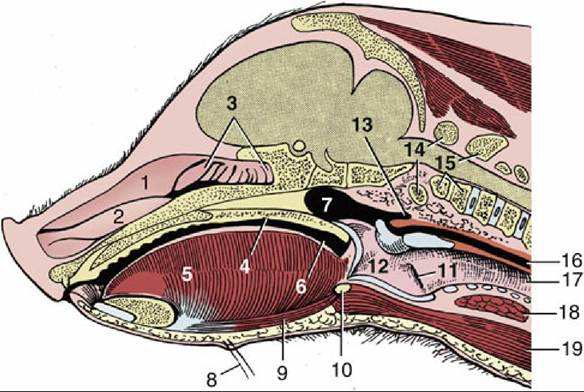
FIG. 32.9 Median section of the head of a 4-week-old pig; the nasal septum has been removed. 1, Dorsal nasal concha; 2, ventral nasal concha; 3, ethmoidal conchae; 4, soft palate; 5, tongue; 6, oropharynx; 7, nasopharynx; 8, mental hairs; 9, geniohyoideus; 10, basihyoid; 11, laryngeal ventricle; 12, larynx; 13, pharyngeal diverticulum; 14, atlas; 15, axis; 16, esophagus; 17, trachea; 18, thyroid gland; 19, sternohyoideus.
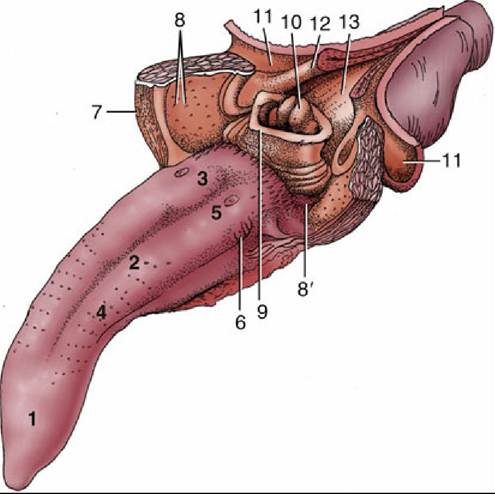
FIG. 32.10 Tongue and pharynx. The soft palate and the dorsal wall of the esophagus have been split in the midline. 1, 2, and 3, Apex, body, and root of tongue, respectively; 4, fungiform papillae; 5, vallate papillae; 6, foliate papillae; 7, palatoglossal arch; 8, tonsil of the soft palate; 8', paraepiglottic tonsil; 9, epiglottis; 10, corniculate processes of the arytenoid cartilages; 11, dorsal wall of nasopharynx; 12, palatopharyngeal arch; 13, entrance to esophagus.
The disposition of tonsils in the pig (Fig. 32.10) may appropriately be summarized here. A paraepiglottic tonsil is situated rostrolateral to the base of the epiglottis (Fig. 32.10/8'); a pharyngeal tonsil is found on the roof of the pharynx; tubal tonsils are associated with the pharyngeal openings of the auditory tubes; and there are the tonsils of the soft palate, already mentioned (Fig. 32.10/8). The first and last of these are sometimes examined at meat inspection, on the pluck (tongue, larynx, trachea, esophagus, heart, liver, and lungs) and on the cut surface of the head, respectively.