The Proximal Stomach Stores Food Awaiting Further Gastric Processing in the Distal Stomach
The major muscular activity in the proximal region of the stomach is of a weak, continuous-contraction nature. These tonic contractions tend to shape the gastric wall to its contents and provide gentle propulsion of material into the distal stomach.
The major muscular reflex of the proximal stomach is adaptive relaxation (Figure 28-6). This reflex is characterized by relaxation of the muscles as food enters the stomach. Because of this relaxation, the stomach can dilate to accept large quantities of food without an increase in intraluminal pressure. Thus the proximal stomach serves as a food storage area. Because of the rather passive muscular activity of the proximal stomach, little mixing occurs there. In fact, food boluses tend to become layered in the stomach in the order in which they were swallowed. As the stomach empties, tension on the wall of the proximal stomach increases slightly, pushing food distally in the stomach, where it can be processed for transport into the duodenum.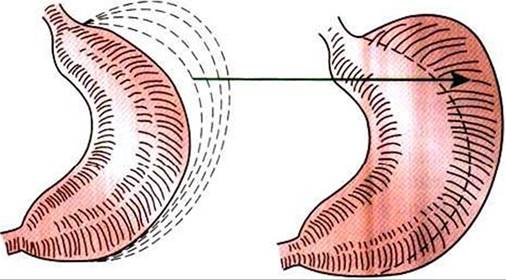
FIGURE 28-6 Adaptive relaxation refers to the stretching of the stomach wall that occurs as the organ fills during eating.This stretching results from muscle relaxation and is accompanied by little or no change in intraluminal pressure,
More on the topic The Proximal Stomach Stores Food Awaiting Further Gastric Processing in the Distal Stomach:
-
Veterinarian -