Transport of Fatty Acids out of the Liver Is Through Chylomicron-Like Particles Known as Very-Low-Density Lipoproteins
Once formed in the liver, fatty acids must be transported either to adipose tissue for storage or to other tissues (e.g., muscle) for direct utilization for energy production. Because fatty acids are insoluble in blood, some special transport mechanism for their distribution is necessary'.
This mechanism is through the hepatic formation of triglyceride-rich serum lipoproteins, also known as very-low-density lipoproteins (VLDLs); these triglyceride-rich lipoproteins are much less dense than other lipoproteins in blood serum. In the synthesis of VLDLs, fatty acids are first esterified to form triglycerides, and the triglycerides are wrapped in a coat of phospholipid, cholesterol, and specific proteins (Figure 32-5). This is essentially the same mechanism by which fatty acids are transported out of the enterocytes after absorption from the gut. In the latter case the lipoproteins are called chylomicrons. The VLDLs of the liver are smaller than chylomicrons but have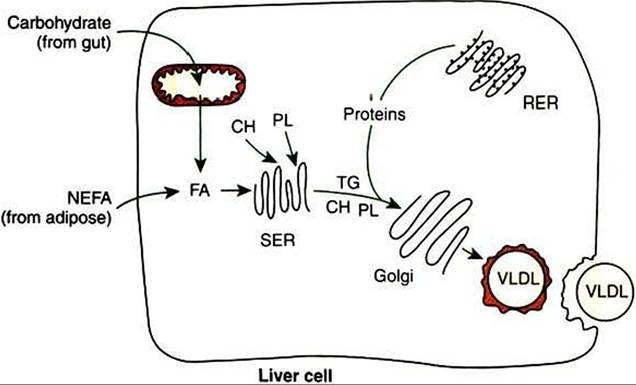
FIGURE 32-5 Formation of very-low-density lipoprotein (VLDL). Fatty acids (EAJfor triglyceride (TG) formation may come from synthesis by carbohydrate or amino acids or from adipose tissue FA arriving at the liver in the form of nonesterified fatty acids (NEFA). Note the similarity to chylomicron formation (see Figure 30-27). CH, Cholesterol; PL, phospholipid; SER, smooth endoplasmic reticulum; RER, rough endoplasmic reticulum.
Table 32-1
Metabolic Classification of Amino Acids
| Indispensable amino acids | Dispensable amino acids | ||
| Branch-chain amino acids | Others | Transport amino acids | Others |
| Leucine | Arginine* | Alanine | Cysteine |
| Isoleucine | Histidine | Glutamine | Glycine |
| Valine | Lysine Methionine Phenylalanine Threonine Tryptophan | Glutamic acid Asparagine Aspartic acid | Proline Tyrosinet Serine |
*lndispensable for cats, but not required in the diets of many other species. tDietary adequacy depends on a supply of phenylalanine.
a similar structure and function. The mechanisms by which VLDLs and chylomicrons deliver fatty acids to peripheral tissues are further discussed in relation to peripheral tissues.