URINARY SYSTEM
The kidneys are lobed and lie retroperitoneally within the pelvic canal in the dorsocaudal celom (Fig. 4.23). In some species the kidneys are fused in the midline. A short ureter drains the kidneys from the ventral side and opens via a urinary papilla in the urodeum.
In male lizards this duct is an outgrowth of the vas deferens. Most lizards have a thinwalled bladder which arises from the ventral urodeum and extends forward under the coprodeum. Urine flows from the urodeum into the coprodeum (Fig. 4.26). In species without a bladder urine is stored and modified in the distal colon before being excreted (Davis et al. 1976).Salt glands
Herbivorous lizards consume a lot of potassium in their diet and often have nasal salt glands to help them excrete the excess salts. They also excrete potassium urate salts in higher concentration in their urine (Dunson 1976).
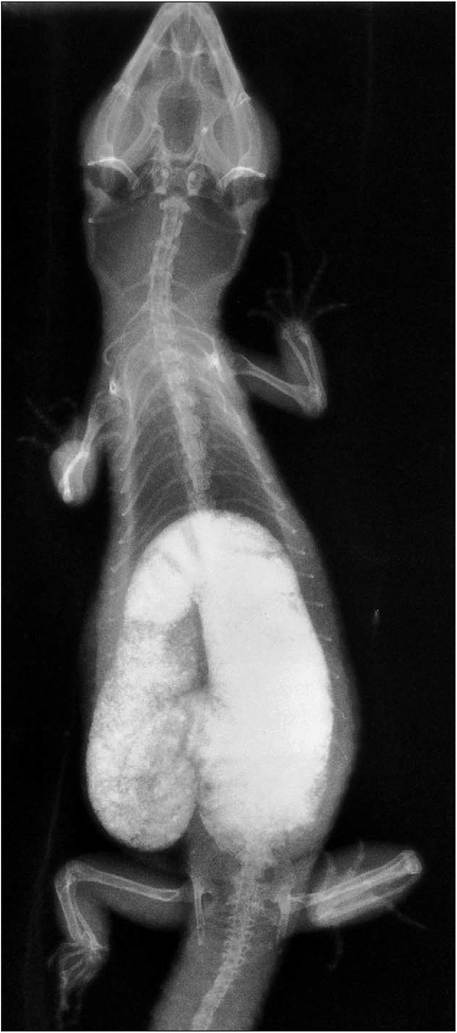
Figure 4.24 • Radiograph of Leopard gecko (Eublepharis macularius) with colonic impaction due to substrate ingestion. There is loss of soft tissue opacity from the tail base (normally a site of fat storage in many geckos) indicating emaciation.
Ileo-cecal valve Proximal colon
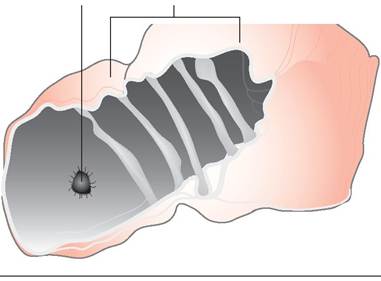
Figure 4.25 • Diagram of iguana colon showing large transverse folds in the proximal colon subdividing it into five pockets. Food can be retained there for up to 3l∕2 days.
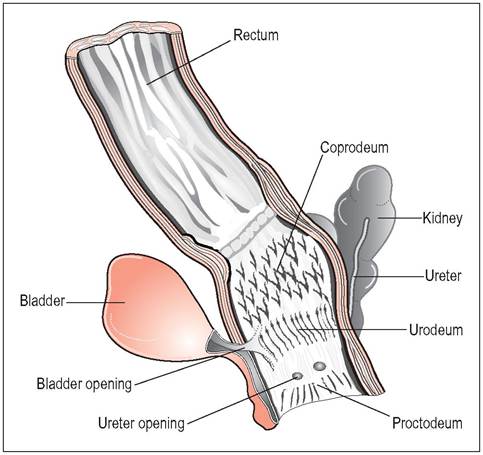
Figure 4.26 • Distal colon and cloaca of lizard with bladder. Urine empties from the ureter into the urodeum and is then refluxed into the bladder.