Antibodies, or Immunoglobulins, Are Glycoprotein Molecules That Can Be Divided into Five Isotypes, or Classes
Antibodies are glycoprotein molecules that are the products of B lymphocytes. Antibodies, also called immunoglobulins, are basically made of four glycoprotein molecules. They arc found on the surface of B cells, where they serve as antigen receptors (BCRs), or free in blood and secretions after being secreted by B cells.
These free, or soluble, antibodies can neutralize antigens and assist in their removal. The basic structure of an antibody molecule has two identical short glycoprotein chains called light (L) chains and two identical longer chains called heavy (H) chains held together by disulfide bonds (Figure 55-5). The L chains are made of two halves, or domains; the half located at the carboxyl end of the chain is called the constant part of the L chain (C1), and the half located at the amino end is called the variable part (V∣). The H chain is made of one variable domain (Vh) and usually three constant domains (CH1, CH2, CH5). The amino terminal ends of the L chain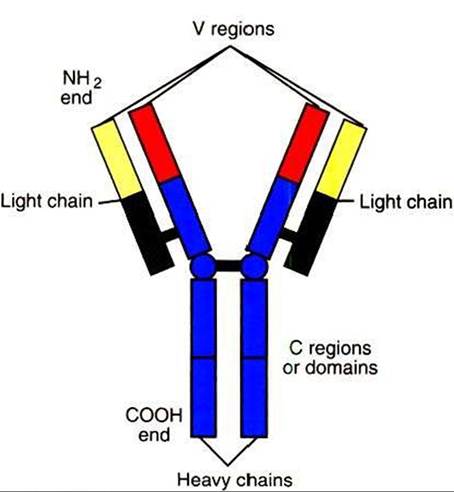
FIGURE 55-5 Basic structure of an antibody molecule.
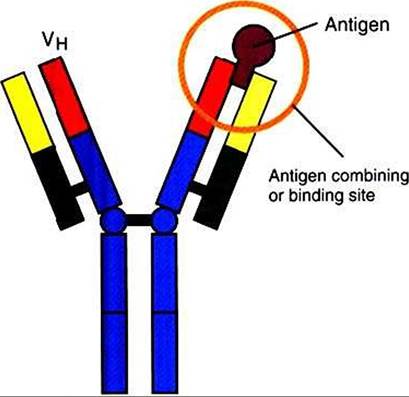
FIGURE 55-6 Antigen-antibody combining site.
these surfaces. Thus» IgA blocks penetration of antigen into the body. IgA responses are mainly elicited if antigen exposure is through contact with mucosal surfaces, such as the upper respiratory and intestinal tracts. IgM and IgG responses are elicited through parenteral contact with antigen (intradermal, subcutaneous, intramuscular, and systemic routes).
Immunoglobulin E (IgE) is a monomer, and its H chain contains four constant domains in addition to the variable domain. Il is found in very low levels systemically, and most IgE is bound to basophils and mast cells (inflammatory and allergic reaction mediators) through its Fc portion.
IgE is able to bind antigen while attached to these cells, thereby eliciting allergic reactions.Immunoglobulin D (IgD) is a monomer and has only two constant domains on its H chain. IgD is primarily bound to the membrane of B cells and is secreted in negligible amounts in the serum. Negligible IgD is secreted.
(Vl) and the H chain (Vh) come together to form an antigenbinding or combining site (Figure 55-6). Therefore, two identical antigen-combining sites exist per basic immunoglobulin molecule. The carboxyl end of the two H chains form the Fc portion of the molecules; this end is the portion able to bind to Fc receptors on specialized cells and is the part of the molecule attached to the membrane of B cells when the immunoglobulin serves as the antigen receptor (BCR) for the cell.
Depending on molecular weight and other characteristics, immunoglobulins can be divided into classes, or isotypes. Basically, there are five isotypes: IgM, IgG, IgA, IgE, and IgD. Soluble immunoglobulin M (IgM) consists of five basic antibody molecules that bind together by disulfide bonds and an additional short protein chain to form a pentamer. Therefore, one IgM molecule has 10 identical antigen-combining sites. Its molecular weight is about 900 kD. In primary immune responses, IgM is the predominant immunoglobulin. Because of its large size, IgM is rarely found in body fluids other than blood. The BCR form of IgM is a monomer of 180 kD.
Immunoglobulin G (IgG) has the structure of the basic antibody molecule (monomer) previously described, and its molecular weight is 180 kD. IgG has two antigen-combining sites and is the predominant immunoglobulin detected in the secondary immune response. It is able to move out of the circulatory system and appears in body fluids and also in secretions.
Immunoglobulin A (IgA) is found in small amounts in circulation as a monomer and in much larger amounts in secretions, where it is found as the predominant immunoglobulin and primarily as a dimer. It is produced by plasma cells (mature B cells) located under body surfaces such as skin, mammary glands, and the intestinal, respiratory, genital, and urinary tracts. IgA is found in secretions and has an attached secretory molecule that protects IgA from intestinal proteases. Secretory IgA is the main immunoglobulin found on mucosal surfaces and has four antigen-combining sites in its dimeric structure. Its main role is to prevent antigen from attaching to