Initial Exposure to Foreign Antigen Induces Slow Onset OfAntibody Appearance, Whereas Subsequent Exposure Induces Faster, Longer- Lasting Antibody Appearance
The exposure of an animal to a foreign antigen usually elicits a specific immune response. This response may involve the production of (1) specifically reactive T cells or (2) antibodies able to bind specifically with the foreign antigen.
Typically, if an animal is exposed to a particular foreign antigen for the first time, no antibodies specific for that antigen will be detected in blood or secretions for several days. This “lag” period can last for up to 1 week, at which time antibodies capable of binding to the antigen appear in circulation and start increasing in quantity for the next 2 or 3 weeks. After that time,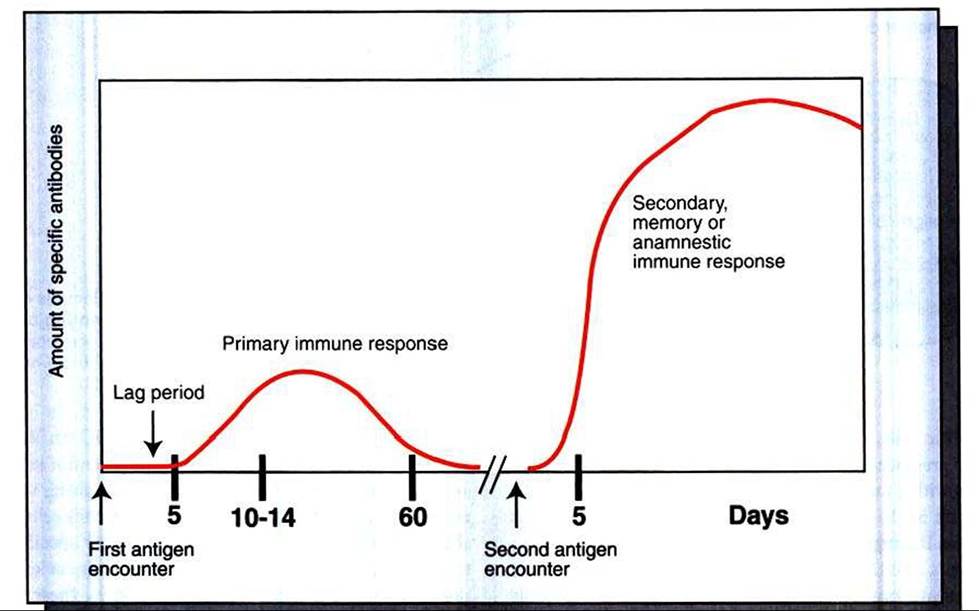
FIGURE 55-4 General dynamics and characteristics of the primary and secondary antibody responses.
antibody quantities plateau and eventually decrease until they essentially disappear. The amount of antibodies produced and the duration of the response depend greatly on the nature of the antigen, quantity and route of exposure, and whether the antigen is given in combination with immune enhancers (adjuvants).
The type of response obtained after a first exposure to a specific antigen is called the primary immune response (Figure 55-4). If the animal is reexposed to the antigen, the lag period is very short, much higher levels of specific antibodies are obtained, and the response usually lasts for a significantly longer period. This response to a second exposure to an antigen is called a secondary immune response or anamnestic (memory) immune response.