Camelid Gestation: Sexual maturity occurs in female camelids at about 1 year of age, although ovarian activity begins at 10 months.
Camelids are induced ovulators, with ovulation occurring 26 to 30 hours after a single mating on average. The right and left ovaries ovulate with equal frequency, but the conceptus usually implants in the left horn.
The gestation period is 11 months. Birth generally takes place between 6:00 AM and 2:00 PM, with the dam in a standing position.The female llama reproductive tract most closely resembles that of the mare, but the uterine body and the straight uterine horns are short and blunt ended. The blood supply to the uterus more closely resembles that of the carnivore than other large domestic animals and is discussed more fully later.
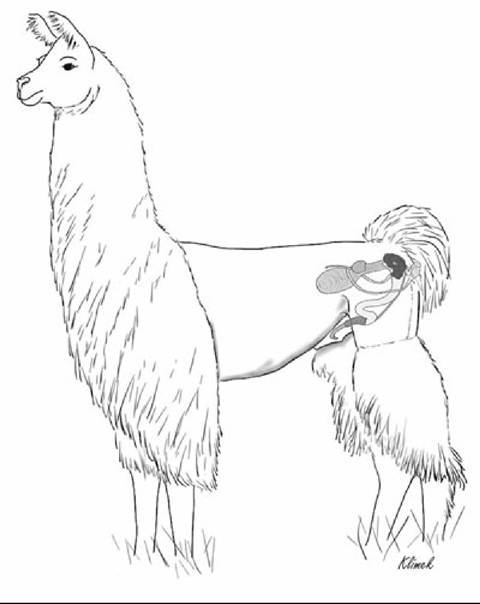
FIG. 38.28 Topographic position of reproductive tract in male llama.
Inactive ovaries measure approximately 1.5 ? 1 ? 0.5 cm but may be double that size when active. Corpora lutea normally project from the surface but may be found internally. The ovarian bursa is large and completely surrounds the ovary. Active ovaries can vary in size depending on the number of follicles and corpora lutea present but are generally 1.5 to 2.5 ? 1.2 ? 1 cm. Most growing follicles and corpora lutea protrude from the surface of the ovary, but corpora lutea have been observed deep in the ovary. Follicles are between 5 and 12 mm; maximal size is 14 mm in llamas and 12 mm in alpacas.
There is a prominent papilla where the uterine tube enters the horn. During the luteal phase of the cycle, the uterine horns curl slightly and become more flaccid. There is an intercornual septum, and there are no intercornual ligaments. The uterus lacks caruncles.
In a nulliparous animal the uterine horns are similar in size (2 ? 6 cm), but in animals that have given birth the left horn is usually larger (3 ? 10 cm) because 90% to 95% of pregnancies implant in the left horn.
The blood supply is also asymmetrical, as is discussed later. The body of the uterus is about 2.5 to 3 cm long and 2.5 to 3 cm wide in the nonpregnant animal. The cervix is 2 to 4 cm long and contains two or three clockwise spiral rings. The vagina is about 15 to 25 cm long, with the cervix protruding slightly into the vagina. The vulvar opening is normally 2.5 to 3 cm in length. The clitoris is located at the ventral edge of the vulvar opening. Fig. 38.30 shows the normal conformation of the female perineal region. The perineal body is relatively small in the camelid.From the perspective of the caudal end of the animal, the uterine horns of a nonpregnant animal are normally placed at the 3 o'clock and 9 o'clock position. The gravid horn in a pregnant animal will usually move ventrally, producing a slight twist in the opposite horn.
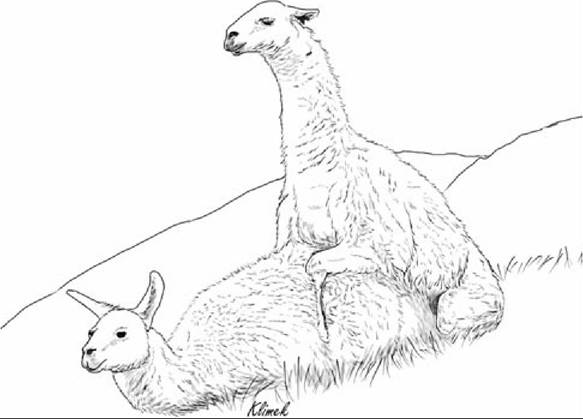
FIG. 38.29 Mating position of the llama and alpaca.
Uterine Torsion: The uterus can become torsed during gestation; if the left horn rotates up and over the right horn, the torsion is said to be clockwise. Alternatively, if the right horn rotates up and over the left horn, the torsion is counterclockwise.
Although rectal palpation of female (and male) reproductive tracts is possible in llamas, evaluation of the female reproductive tract for pregnancy determination is usually done via either transrectal ultrasound for early pregnancies or transabdominal ultrasound in later stages.
The structure of the teat and udder, and their blood supply, is very similar to that of the cow. Although it is much less conspicuous than that of the cow, the camelid udder is divided and supported by a similar suspensory apparatus. Fig. 38.31 shows the normal udder and teats of an alpaca. The teats are small, and the two teats on each side are relatively close together. Each of the four quarters of the udder has two separate lactiferous systems.
Separation of Teats/Supernumerary Teats: Because there are two lactiferous systems per quarter, there is sometimes complete or partial separation of teats associated with the lactiferous systems, and supernumerary teats do occur; these do not always communicate with a lactiferous system.