RECEPTORS FOR ODORANTS
As fragrant molecules grace the nasal cavity, they gracefully dissolve within the fluid exquisitely secreted by olfactory glands nestled in the olfactory mucosa. An intricate dance unfolds as these molecules, enchanting olfactory receptors, find their partner in a protein ballet called olfactorybinding protein, gracefully present in the mucus.
Crafted by the olfactory glands in the nasal mucosa, this protein acts as a virtuoso, thought to both carry and concentrate the enchanting molecules. The olfactory cells, true connoisseurs, possess an extraordinary ability to discern a myriad of scents even at the most minuscule concentrations. Within the olfactory mucosa reside bipolar sensory neurons, their opulent cell bodies restingjust below the ethereal cribriform plate, a delicate sheet of the ethmoid bone. A sensory neuron, akin to a poetic muse, extends a single dendrite, culminating in an expansive olfactory knob gracing the surface of the olfactory mucosa. Each olfactory knob, a symphony in itself, gives birth to a symphony of 10-20 cilia, delicately spreading over the surface like a lustrous veil, embraced by the caress of mucus. For the poetry of odors to unfold, molecules must waltz through this mucosal layer, where the cilia, adorned with sensory receptors, stand ready to transduce the olfactory sonnet. In this olfactory ballet, groups of sensory neurons express their olfactory receptors, forming harmonies that resonate with specific odors, each note carrying a distinct affinity for the aromatic molecules. At the opposite end of this sensory ballet, a solitary nonmyelinated axon emerges, not in solitude but in a gathering of elegance. Unlike their cranial counterparts, these axons converge, creating petite fascicles known as the fila olfactoria. Through ethereal foramina in the cribriform plate, they embark on a journey, an aromatic pilgrimage, entering the olfactory bulb. Here, in the grand ballroom, they engage in a refined dance, synapsing with tufted and mitral cells, contributing to the opulent symphony of the olfactory experience. In this fragrant tapestry, the olfactory system weaves an exquisite narrative, an eloquent ode to the intricacies of scent transduction and transmission.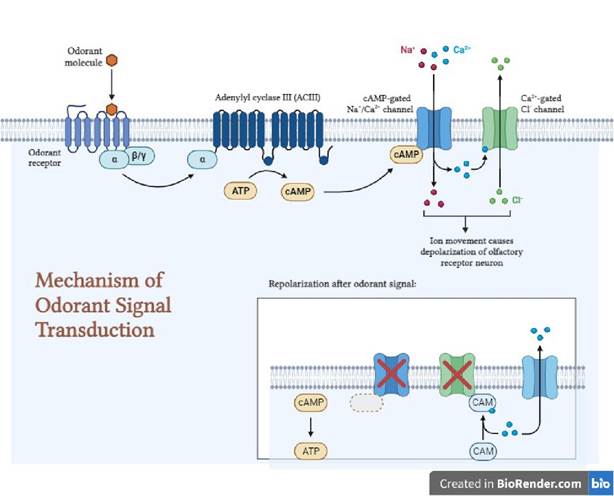
FIGURE 12.3 Mechanism of odorant signal transduction.
12.5
Source:
Rana Tanmoy (ed.). Principles of Veterinary Animal Physiology. CRC Press,2026. — 290 p.. 2026
More on the topic RECEPTORS FOR ODORANTS:
-
Veterinarian -