RespiratoryAlkalosis Is Caused by the Loss of Carbon DioxiderWhich Increases Blood pH
Respiratory alkalosis is caused by alveolar hyperventilation, which results from stimulation of the chemoreceptors by hypoxia or from stimulation of intrapulmonary receptors by lung injury or inflammation.
Overly vigorous use of a ventilator also can cause hyperventilation in an anesthetized animal. Carbon dioxide is eliminated faster than the tissues produce it, and so blood Pco2 decreases. The changes in blood chemistry are the inverse of those in respiratory acidosis: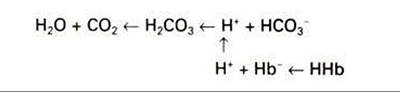
As CO2 is eliminated, H2CO3 is formed from H’ and HCO3", and thus the pH increases and [HCO3 ] decreases. Hydrogen ion is supplied by release from nonbicarbonate buffers, such as hemoglobin. The net result of these processes is that Paco^
decreases, the pH increases, and ∣HCO3'∣ decreases and is replaced by other buffers. There is no change in total buffer base. The increase in the [HC0370.03 ∙ Pco2I ratio increases pH.
Figure 52-4 shows the increase in pH and decrease in [HCO3^∣ as Pco2 decreases. To adjust the pH toward normal, hyperventilation must be stopped, or the kidneys must eliminate HCO3-. The latter occurs because the low Peo2 and alkalosis reduce Hf and NH3 production by the kidney. When H+ is not produced in sufficient amounts to capture all the filtered HCO3-, the latter spills into the urine and is lost from the body.