A Series of Enzymatic Reactions Converts Tyrosine into the Signaling Molecules Dopamine, Norepinephrine, and Epinephrine
Figure I-2 is a diagram of the series of reactions by which the amino acid tyrosine is converted into three different signaling molecules: dopamine, a brain neurotransmitter; norepinephrine, a neurotransmitter of the peripheral autonomic nervous system; and epinephrine, an autonomic neurotransmitter and hormone.
Dopamine, norepinephrine, and epinephrine share a similar structure. All contain a phenyl (benzene) ring with two hydroxyl groups (i.e., catechol) and an amine group (thus catecholamines). They are among the large number of molecules that function as neurotransmitters. That is, the electrically coded information sent along nerve cells causes the release of a chemical, the neurotransmitter, at the terminal of the neuron, which is next to a target cell, such as another nerve, a muscle, or an endocrine cell. The electrically encoded information of the nerve is transmitted to the target cell by the binding of the neurotransmitter to proteins on the surface of the target cell. Proper neurotransmitter synthesis is crucial to nervous function and physiological regulation.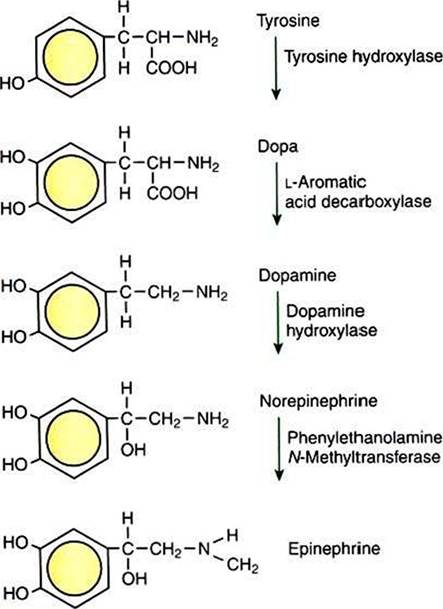
FIGURE 1-2 Epinephrine biosynthetic pathway.The amino acid tyrosine is metabolized to the neurotransmitters dopamine, norepinephrine, and epinephrine.The diagram shows the names and structural formulas for each compound in the path and the names of the enzymes that catalyze each reaction.
In the first step of catecholamine biosynthesis, tyrosine binds to the enzyme tyrosine hydroxylase, which catalyzes the addition of another hydroxyl group to the phenyl group to form dihydroxyphenylalanine, almost always called dopa. This hydroxyl group alters the enzyme-ligand interaction; the key no longer fits the keyhole. Dopa is released from the tyrosine hydroxylase and is then bound by another enzyme, L-aromatic amino acid decarboxylase.
As the name implies, this enzyme catalyzes the removal of the carboxyl group, converting dopa to dopamine. Dopamine is converted into norepinephrine by the activity of dopamine hydroxylase, which adds yet another hydroxyl group, this time to the two-carbon tail of dopamine. Finally, addition of a methyl group to the amino nitrogen by phenylethanolamine N-metIiyltransferase gives rise to epinephrine (also called adrenalin). Note the binding specificity of the enzymes: whereas the catecholamine structures are all similar to one another, different enzymes bind each one (e.g., epinephrine does not bind to dopamine hydroxylase).The allosteric properties of one enzyme in this pathway provide an example of physiological regulation. Certain hormones and neurotransmitters cause the phosphorylation of tyrosine hydroxylase, the first enzyme in the pathway, increasing its activity. That is, phosphorylation of the enzyme increases the rate at which it catalyzes the conversion of tyrosine to dopa. Because this step is the slowest in the pathway, an increase in the activity of this protein increases the net rate of synthesis of all the catecholamines. Regulated decreases in the rate of catecholamine synthesis are achieved by a different allosteric mechanism: binding of end products to the enzyme. Dopamine, norepinephrine, and epinephrine can all bind to tyrosine hydroxylase at a site different than the site for tyrosine. These binding events inhibit the enzymatic activity. The inhibition of the pathway by its own end products makes this a classic case of allosteric control called end-product inhibition. Many substances regulate their own synthesis by inhibiting an initial enzyme in the pathway. If the cell has enough end products, these products inhibit further synthesis by allosteric changes in the enzyme. This is an example of the following sequence: specific binding → protein shape change → change in protein-binding properties and protein function → this change regulates something.