The Enteric Nervous System Contains Receptors, Sensory Neurons, Interneurons, and Motor Neurons
The plexuses of the ENS contain sensory (afferent) neurons, interneurons, and motor (efferent) neurons. Sensory input comes from mechanoreceptors within the muscular layers and chemoreceptors within the mucosa.
Mechanoreceptors monitor distention of the gut wall, whereas chemoreceptors in the mucosa monitor chemical conditions in the gut lumen (Figure 27-4).Enteric motor nerves supply vascular muscle, gut muscle, and glands within the gut wall. Motor innervation of gut structures is less intimate than that found, for example, in skeletal muscle; no direct synaptic type of junction exists between enteric nerve endings and the structures they innervate. Rather, axons end in arborizations that contain many vesicular structures called varicosities (see Figure 27-4). The varicosities contain regulatory substances collectively known as neurocrines that are secreted in response to action potentials and that affect the activities of nearby muscle or glandular cells. Efferent neurons of the ENS may be stimulatory or inhibitory, and the nature of their action is largely determined by the type of neurocrine substance they secrete. Many of the neurocrine substances secreted by the ENS are peptides, and many are identical in chemical structure to regulatory molecules secreted by the endocrine and paracrine cells of the gut. 'I hese cells and their secretions are discussed in the following section.
Many of the stimulatory, or excitatory, neurons are cholinergic, having acetylcholine as their neurocrine transmitter substance. A peptide known as substance P is another common excitatory neurocrine, and other minor excitatory neurocrines may exist. Inhibitory enteric neurons contain different neurocrine transmitters, most of which are peptides. These inhibitory neurocrines vary widely and include such peptides as somatostatin and pituitary adenylate cyclase- activating peptide (PACAP), as well as nonpeptide neurocrines such as nitric oxide (NO) and adenosine triphosphate (ATP).
Some neurocrines, such as vasoactive intestinal peptide (VIP), are inhibitory to gut muscle but stimulatory to the secretion of mucosal glands. The substances mentioned here are major neurocrines in the GI tract; the complete list of neurocrines and other regulatory substances in the gut is long and still expanding. Many of their names, such as calcitoninBox 27-1
Neurohumoral Regulatory Molecules of the Gut[‡]
Peptide
Calcitonin gene-related peptide (CGRP)
Cholecystokinin
Enkephalins
Enteroglucagon
Gastrin-releasing peptide (GIP)
Gastrin
Galanin
Glucose-dependent insulinotropic peptide (GIP)
Motilin (I)
NeuropeptideY
Neurotensin (I or S, depending on region of gut)
Peptide histidine isoleucine (PHI) (I)
Peptide YY
Pituitary adenylate cyclase-activating peptide (PACAP) (I) Secretin
Somatostatin (I)
Substance K
Substance P (E)
Vasoactive intestinal polypeptide (VIP) (I)
Nonpeptide
Acetylcholine (Ach) (E)
Nitric oxide (NO) (I)
Adenosine triphosphate (ATP) (E)
E-Hydroxytryptamine (5-HT, or serotonin) (I or Ez depending on receptor type)
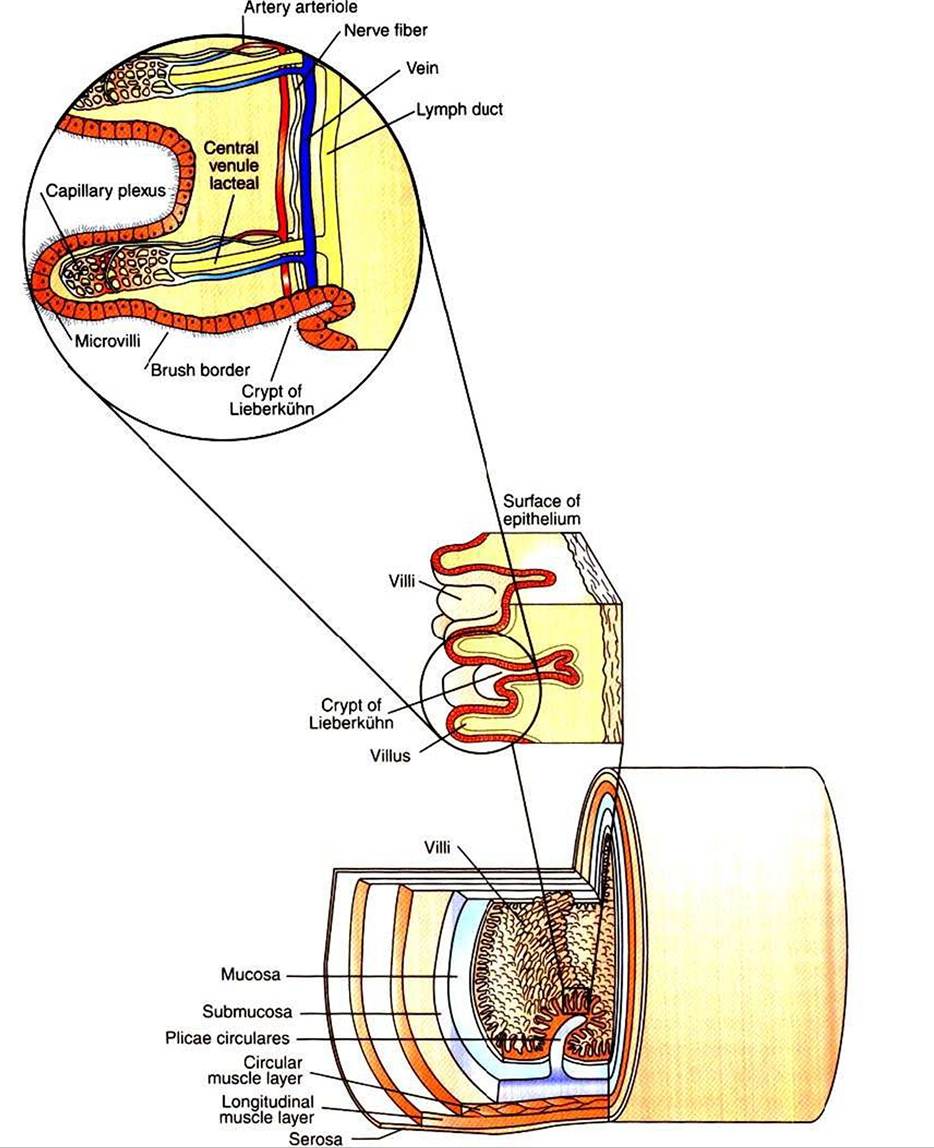
FIGURE 27∙2 Cross-sectional anatomy of the gut wall.
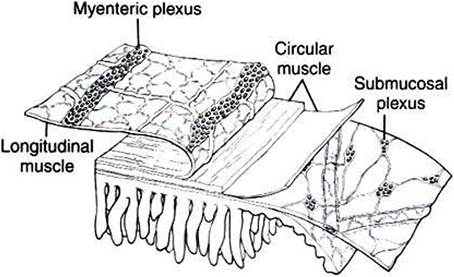
FIGURE 27-3 ■ Organization of the enteric nervous system. Note the arborizations of nerve fibers that run between the individual ganglia of the myenteric and the submucosal plexus. (Modified from Furness JB, Costa M:Types of nerves in the enteric nervous system, Neuroscience 5:1, 1980.)
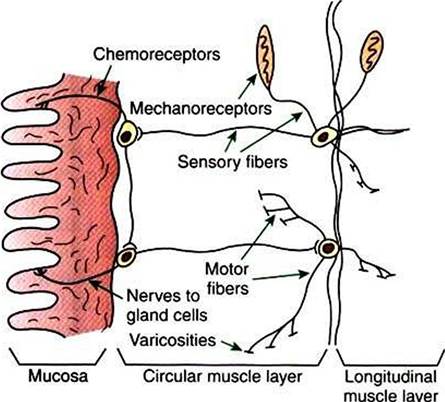
FIGURE 27-4 ■ Arrangement of nerve fibers and receptors within the enteric nervous system. Varicosities release regulatory substances known as neurocrines in the vicinity of muscle fibers.
gene-related peptide (CGRP) and pituitary adenylate cyclase- activating peptide (PACAP), are obscure, nondescriptive, and probably relate to historical events in their discovery rather than to their function in GI physiology. Box 27-1 illustrates the multiplicity and complexity of neuocrines and other regulatory molecules in the gut. The physiological basis for this complex and seemingly redundant system of regulatory molecules is discussed later, after the GI endocrine and immune systems.