The Immune System Participates in Regulation of Gastrointestinal Activity
The ENS and GI endocrine/paracrine systems monitor the physical (wall distention and pressure) and chemical environment within the gut. Another important aspect of the gut environment, however, is the antigenic milieu.
It is the function of the GI immune system to monitor the antigenic environment of the gut. The mucosal surface of the gut is exposed to a vast number of microorganisms and other antigens, and the means necessary to control their numbers and their access to the body is provided by the many immune cells in the gut mucosa. In fact, the majority of the immune system cells in the body reside in the gut mucosa. These cells span the entire range of immune cell types. On one hand, the immune cells of the gut respond to antigenic stimulation similar to immune cells in other body sites: antigenic memory is created; neutralizing and opsonizing antibodies are synthesized; and Rillercellsarerecruited (see Chapters 54 and 55). On the other hand, inflammatory mediators such as prostaglandins, histamine, and cytokines, the products of immune cells, can interact directly with the ENS and Gl endocrine/paracrine cells to modulate gut activities. For example, if a microbe begins to invade an area of the gut, sensitized immune cells will secrete prostaglandins, cytokines, and other immune mediator substances. These immune mediators can interact directly with cells of the ENS and the GI endocrine/paracrine system, eliciting a response of increased fluid secretion and motility in the stimulated area of gut. The result is that the pathogenic microbe is washed downstream in the gut and eventually passed in the feces, thus protecting the gut and ridding the animal of the pathogen.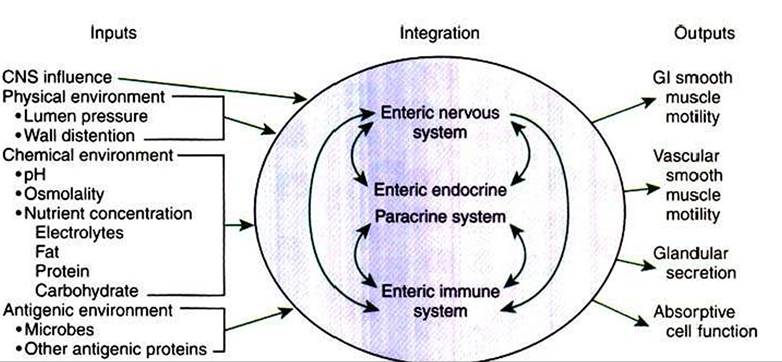
FIGURE 27-10 Stimulus-response coupling of gut reflexes and reactions at their most basic level. Despite its apparent complexity, the gut receives a limited array of afferent information and can respond with a similarly limited number of reactions. Afferent information supplied to the gut includes signals from the central nervous system, mechanical stimulation generated by wall distention or luminal pressure, chemical signals generated by luminal contents, and antigenic stimulation provided by microbial products or ingested antigens.This information is received by three integrating systems: the enteric nervous system (ENS), the endocrine/paracrine system, and the immune system of the gut. Among these systems there is considerable cross-communication that aids in integrating information and refining the efferent signals to the response elements.The responses of the gut are equally limited. Smooth muscle of the gastrointestinal wall can contract or relax; vascular smooth muscle can adjust blood supply; and absorptive and secretory cells can become more or less active. Although the gut is indeed complex, all functions may be reduced to these elements.