Bovine Somatotropin
Robert J. Collier • Dale E. Bauman
Introduction
Growth hormone (GH; somatotropin, ST) belongs to the protein family of somatolactogenic hormones produced in all mammals.1,2 Bovine growth hormone (bGH; bovine somatotropin, bST) is the ST produced in cattle.3,4 Although ST is named for its effects on growth, it is now known that it has a wide range of activities that are broadly classed as homeorhetic in that it coordinates metabolism to support specific physiologic states.5,6 One of these states is lactation, and ST is also classified as a galactopoietic hormone in that it increases milk yield in established lactation.7,8 Russian scientists were the first to extend this effect to dairy cows when they administered pituitary extract to over 2000 cows.
They only gave a single injection, so the increase in milk yield lasted only a day or so, but they reported the “absolute harmlessness” of the extract and that responses were “more profitable on a well-run farm than on a farm with a poor food basis or where cattle are kept under unsatisfactory conditions.”7 In the 1940s British scientists conducted a series of studies with a goal of increasing milk supply to help alleviate chronic food shortages during World War II. They were the first to identify bST as the galactopoietic factor in pituitary extract and concluded its use “would be highly profitable to the individual farmer”; however, they also found the supply of bST was too limited to significantly impact national milk supply.8 Additional studies with lactating cows were conducted over the decades that followed,9,10 but these were constricted by two factors. First, supply of bST was limited to that isolated from the pituitary glands of slaughtered cows. Second, based on incorrect ideas on the mechanism of bST, scientists only worked with fat, low-producing cows (bovine growth hormone (rbST) available for the use as a milk production enhancing agent.11,12 Approval of rbST for use in lactating dairy cows in the United States was obtained by Monsanto Company from the U.S. Food and Drug Administration (FDA) in 1993 and marketing began in 1994.The following sections will cover the chemistry, production response and mechanism of action, cow health and well-being, human safety, and sustainability implications of rbST use in the dairy industry.Chemistry
Somatotropin is a peptide hormone composed of amino acids, and the sequence of these amino acids differs among species.3 Bovine somatotropin is a protein hormone consisting of either 190 or 191 amino acids depending on the variant and having a molecular weight of 22 kDa (Fig. 41.27).13 The mass variants of pituitary bST, associated with the presence or absence of alanine at position 191 of the molecule, are considered secretory process alterations and not genetic in nature. Additional variants have either valine or leucine at position 127, which represents a genetic difference (see Fig. 41.27).13,14 Thus, there are four possible pituitary variants of somatotropin circulating in the blood of cattle with either alanine or phenylalanine at the carboxyl terminus and either leucine or valine at position 127 (Fig. 41.28). The distribution of these pituitary variants across the dairy breeds is shown in Fig. 41.29. Due to the presence of heterozygotes in some breeds, it is possible in some animals to have all four forms of the pituitary variants in circulation
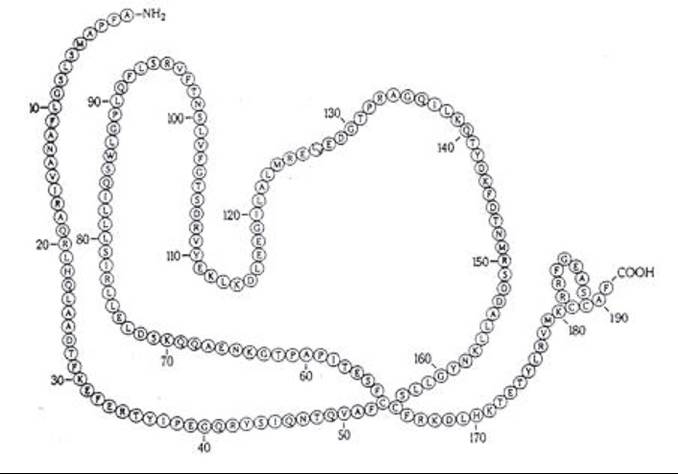
FIG. 41.27 Amino acid sequence of pituitary bovine somatotropin.
NH2-ala-phe-pro-ala-met-ser...leu(127)...phe(191)
NH2-ala-phe-pro-ala-met-ser...val(127)...phe(191)
NH2-ala-phe-pro-ala-met-ser...leu(127)...ala(190)
NH2-ala-phe-pro-ala-met-ser...val(127)...ala(190)
FIG. 41.28 Differences in carboxy terminus amino acid (alanine or phenylalanine) and position 127 (valine or leucine) of the four pituitary variants of bovine somatotropin.
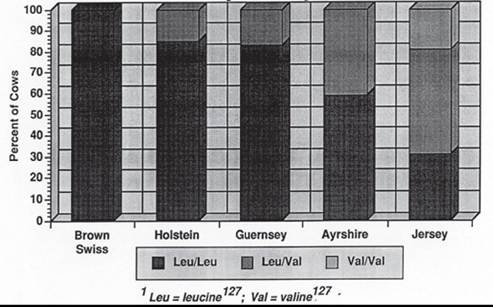
FIG.
41.29 Occurrence of the somatotropin genotypes in the five major dairy breeds. (From Lucy MC, Hauser SD, Eppard PJ, et al: Variants of somatotropin in cattle: gene frequencies in major dairy breeds and associated milk production. Domest Anim Endocrinol 10:325-333, 1993.)at the same time.4 Additional mass variants occur due to dimerization of bST molecules, but these forms are considered inactive.15 Formation of somatotropin dimers also occurs in production of rbST, but these are also inactive.16 There is no evidence that any of the types of variants of bovine somatotropin are metabolized differently. The plasma kinetics of bST were shown to be consistent with a two-compartment model with half-lives estimated at 8.2 and 29.1 minutes for the two compartments.17 The compartment with the short half-life appears to represent free somatotropin while the compartment with the extended half-life was believed to represent the somatotropin bound to a protein complex.17 Free and bound bST represent 100% of total somatotropin measured by radioimmunoassay of bovine blood.
Recombinant variants produced by companies seeking to use bST commercially were either the same as native bST or differed only slightly at the amino terminus.18 The rbST currently marketed in the United States has the U.S. Adopted Name (USAN) of Sometribove; it has a single amino acid substitution of methionine for alanine at position 191 and leucine at position 127.15 All of these recombinant variants were tested in vivo for oral activity and found to have none in laboratory rats.11 Recombinant variants have pharmacokinetics identical to pituitary variants of bST.17 Since the pharmacokinetics of rbST in vivo does not differ from pituitary BST, it is reasonable to assume that the degradation pathways are essentially the same for both molecules. Also, it is assumed that highly purified fragments of pituitary bST would not differ from similar fragments of rbST in biological activity.
Data from lactation studies in cattle indicated no difference in response between recombinant and pituitary-derived forms of bST.11,17 Bovine somatotropin is marketed as an oil/zinc formulation and delivered for use in dairy cattle at a label dosage of 500 mg SC every 14 days (approximately 37 mg/day) for a 500-kg cow. In safety studies, up to 300 μg∕kg∕day was injected into cattle.19Biological actions of intact ST are well described.11,20,21 The definition of ST's biological role has changed over time. Although first described as a regulator of growth, the term somatotropin does not nearly describe the pleiotropic actions of this molecule. A better term for ST is “homeorhetic regulator.” Homeorhesis is “the coordinated control of metabolism in support of a dominant developmental or physiological process.”5 Somatotropin is a key player in regulating metabolism across a variety of physiologic states and has many target tissues. Key developments contributing to our understanding of ST as a homeorhetic regulator are the identification of heterogeneity of the receptor population in both distribution and form of the receptor and its ability to alter tissue responses to acute homeostatic signals.5,9,12,20 However, the actions of ST described to date are those initiated by the intact molecule. There are many cell types that have been identified as targets of ST, including hepatocytes, ovarian luteal cells, cells of the small intestine, bone, adipocytes, muscle, immune system cells, and cardiac cells.21-24 The liver appears to be a key target for ST owing to its central role in regulating metabolism and its secretion of the ST mediators, insulin-like growth factors (IGFs), and their binding proteins, in response to ST binding. Binding of ST to its receptor is followed by activation of JAK, MAP, and tyrosine kinases and transfer of the cytoplasmic domain of the receptor to the nucleus while the extracellular domain, also called the somatotropin binding protein, is cleaved and 2729 enters circulation as a complex with its bound somatotropin.2'2 Because one of the actions of ST is to increase plasma levels of IGF-1 and the IGF-1 molecule in cattle is identical to the IGF-I molecule in humans, there was great interest in the levels of IGF-1 in milk and its potential impact on the human population.18,26 This is covered in the section on human safety.
In regard to bST activity in humans, the bovine and human growth hormones are of similar size and differ by 35% in amino acid sequence.18,25 It is well established that although primate growth hormones can bind and activate nonprimate growth hormone receptors, the reverse is not true. The amino acid sequence required for specificity of human somatotropin for its receptor has been identified with the key interaction occurring between arg-43 of the primate receptor and asp-171 of primate somatotropin.28-30 In nonprimate receptors this position is replaced by leucine, and histidine occupies the place of aspartate.28-30
Metabolism and degradation of bSTresults in a variety of “fragments” of differing molecular weights and size. Many of these have been reported to have partial growth hormone like 273133
activity.2',31-33 However, no studies have examined kinetics of metabolism and clearance of these fragments. It is important to note that since these fragments have low affinity for the growth hormone receptor or the binding protein, they would likely reside in the plasma pool with a short half-life.32,33
Production Responses and Mechanism of Action The production of rbST represented an exciting development that improved our understanding of lactation biology and offered the opportunity for commercial use. The production and management aspects of rbST have been extensively investigated with over 500 scientific publications reporting results of controlled experiments and field trials. Several excellent reviews have summarized production and management dimensions of the response to rbST.34-39 From a producer prospective, the use of rbST makes all cows more like the best cows in the herd. This highlights the importance of comprehensive management programs related to nutrition, reproduction, and cow health, and the need for these programs is the same for cows of comparable production regardless of whether rbST is used to achieve that production.
As a brief overview, Posilac is the commercial oil/zinc formulation of rbST approved in the United States for lactating dairy cows. It is administered by subcutaneous injection at 14-day intervals commencing on the 9th to 10th week post calving and continuing until the end of lactation.40 Use of rbST before the 9th week of lactation is not recommended because safety studies were not conducted during this interval and because milk yield responses are more difficult to assess during this period because milk yield is still increasing, making it difficult to determine what the cow would have produced had she not been treated. There is an immediate increase in milk production when rbST treatment is initiated, which persists until rbST supplementation is discontinued. Published results from controlled experiments and field trials indicate that the increased milk production response typically ranges from 4 to 6 kg/day.11,34-36,40 However, a lower response or even no response will occur under conditions of poor management or when animal well-being is compromised. Milk responses have been observed for all breeds and cows regardless of genetic merit. Across experiments the variation between unsupplemented and supplemented cows is similar, indicating that all cows are responding to endogenous pituitary bST and exogenous rbST in a similar manner. Some producers have injected the rbST formulation at 10-day intervals in order to increase the milk yield response. This is considered off-label use and is not recommended. However, the net effect of injecting rbST formulation at 10-day intervals is to increase the dose of rbST from 50 mg/day over a 14-day interval. This dose was included in the safety evaluation, and the milk yield response is linear over a range of doses from 0 to 750 mg/14 days.35
Milk composition is of special importance, and controlled experiments and field studies have demonstrated that the nutritional components and manufacturing characteristics of milk are unaltered by the use of rbST supplementation.12,37,41,42 Milk composition is affected by many factors including breed, genetics, diet, stage of lactation, and environment; these factors affect milk composition in an identical manner in rbST-treated cows.
Somatotropin alters the partitioning of nutrients to allow for an increase in mammary synthesis of milk.9,12,43 Thus, effects on nutrient use in other physiologic situations were of interest. Investigations have demonstrated that lactating primparous heifers that have not attained mature growth will still do so during rbST treatment. Likewise, rbST-supplemented cows simultaneously lactating and pregnant will still shift nutrient partitioning to support fetal growth and replenishment of body ι
reserves during the later stages of pregnancy.37,38 Furthermore, the increase in milk yield and persistency that occurs with rbST use continues to be observed when lactation is extended
44
in nonpregnant cows.44
Feed is a major expense in the dairy enterprise and a major consideration in the management of dairy cows. Compared with the immediate milk response, voluntary feed intake gradually increases over the first few weeks of rbST treatment and the magnitude of the increase matches the nutrient requirements
37 3845
for the extra milk.37,38,45 Bioenergetic studies have demonstrated that nutrient requirements for maintenance and per unit of milk are not different in rbST-supplemented cows. Thus, rbST alters the partitioning and use of absorbed nutrients with little or no effect on digestive processes. Overall, dairy cows receiving rbST need to be allowed access to adequate amounts of a balanced ration, but no special diets are required.37 Extra nutrients are required to support the increase in milk production, but these extra nutrients are all used for milk synthesis. The increase in productive efficiency that results from use of rbST is further discussed in the Sustainability section.
Milk yield per cow has progressively increased over the past 75 years, and this gain in productivity is due to adoption
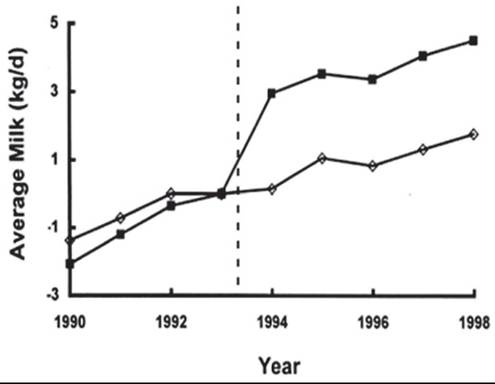
FIG. 41.30 Improvements in average daily milk yield in Northeast dairy herds. Posilac use commenced February 1994 (dashed line) and data encompass preapproval (1990 through 1993) and postapproval (July 1994 through 1998) periods. Control herds (open diamonds) never purchased Posilac, and bST herds (closed squares) used Posilac continuously throughout the postapproval period. Data represent 340 herds with over 80,000 cows and 200,000 lactations; for comparison, daily yields are expressed relative to 1993, the year before commercial approval of rbST. (Adaptedfrom Bauman DE, Everett RW, Weiland WH, et al: Production responses to bovine somatotropin in Northeast dairy herds. J Dairy Sci 2:2564-2573, 1999.)
of new technologies and improvements in management practices. Data from a large field study demonstrate the annual gain in daily milk per cow over an 8-year period during the interval of rbST approval.48 Herds had the characteristic annual gain in daily milk per cow during the 4-year preapproval period, but in herds that adopted rbST the yield was increased by a similar additional increment each year during the postapproval period when rbST was used (Fig. 41.30). When adjusted for the proportion of supplemented cows, the incremental increase due to rbST was relatively constant and equal to approximately 4 to 5 kg milk per day.
Thus, the use of rbST did not alter the rate of genetic progress in herds using rbST and the response is not altered by relative genetic merit of cows receiving rbST.
The regulation of nutrient use for milk synthesis involves two types of controls—homeostasis and homeorhesis.5,49 Homeostatic controls regulate metabolic processes on an acute, minute-by-minute basis to maintain steady state conditions; insulin is a key homeostatic control, and its regulation of glucose utilization is of critical importance in lactation. Homeorhesis operates on a chronic, long-term basis and can be defined as the “coordinated regulation of metabolic processes to support the needs of a physiologic state.”5 Homeorhetic controls are analogous to a symphony conductor who coordinates the contributions of all the various instruments that make up the orchestra to produce a harmonious symphony. Somatotropin is a major homeorhetic control; during lactation, somatotropin regulates the partitioning of nutrients to support milk synthesis by altering tissue responses to homeostatic signals.9,49 This orchestration involves most organs and tissues in the body and includes the metabolism of all nutrient classes—carbohydrates, lipids, proteins, and minerals. Thus, rbST treatment both increases milk synthesis by the mammary gland and orchestrates other body processes in a manner to provide the necessary 91149 nutrients to support the enhanced milk synthesis.9’’
Some of the major coordinated changes that occur with rbST treatment are summarized in Table 41.9. These adaptations are of special importance when rbST is first initiated because the
■ TABLE 41.9
Effect of Bovine Somatotropin on Specific Tissues and Physiologic Processes in Lactating Cows
Tissue Process affected during first few days and
weeks of treatment
Mammary ↑ Synthesis of milk with normal composition
↑ Uptake of all nutrients and milk synthesis per secretory cell
↑ Number and maintenance of secretory cells
↑ Blood flow and nutrient supply consistent with increase in milk yield
Liver ↑ Rates of glucose production
J Ability of insulin to inhibit glucose production
Adipose J Fat deposition if in positive energy balance
↑ Fat mobilization if in negative energy balance
J Ability of insulin to stimulate fat deposition ↑ Ability of catecholamines to stimulate use of body fat reserves
Intestine ↑ Absorption of Ca, P, and other minerals
required for milk
Whole body J Oxidation of glucose to spare use for milk synthesis
↑ Fatty acid oxidation if in negative energy balance
Φ Energy expenditure for maintenance
↑ Energy expenditure consistent with increase in milk yield (i.e., energy per unit of milk not changed)
↑ Cardiac output consistent with increases in milk yield
↑ Immune response
↑ Voluntary feed intake to support increased milk
↑ Productive efficiency (milk per unit of nutrient intake)
Changes (↑ = increased, f = decreased, ψ = no change) that occur in initial period when metabolic adjustments occur to match the increased milk synthesis.
Adapted from references 9, 11, and 20.
increase in milk yield occurs immediately and the matching increase in voluntary feed intake is more gradual. Glucose provides an excellent example of the coordinated responses.11’49 Glucose is used for milk synthesis, primarily for milk lactose, and the milk response to rbST includes increased mammary uptake and use of glucose. At the same time, acute tissue responses to insulin are shifted so that liver synthesis of glucose is increased and the use of glucose by adipose and other body tissues is reduced. The net effect is that rbST-treated cows partition more glucose to the mammary gland for increased milk synthesis, but glucose supply and use remain in balance. Thus, glucose homeostasis and the cow's well-being are maintained.47
An additional dimension of the mechanism by which rbST increases milk production involves an improvement in the persistency of milk production.50 Milk production typically peaks at about 60 days postpartum and then declines gradually over the remainder of the lactation cycle. The decline in lactation corresponds to a gradual loss of mammary cells referred to as cell death or apoptosis.51 Mammary gland cell numbers are better maintained in first-lactation heifers and in cows that have a greater lactation persistency. Supplementation with rbST also improves the maintenance of actively secreting mammary cells.51 The net effect is that the milk yield is more persistent in rbST-supplemented cows so that differences between cows receiving rbST and untreated cows tend to increase over the course of the lactation.
Health and Well-Being
As the first recombinant protein with potential use in production animals, the animal safety evaluation was extensive. In the United States this included the traditional evaluation by the FDA, as well as public hearings, science evaluations, and legislative reviews.11,12,52 After a thorough review of well-controlled studies, the FDA Center for Veterinary Medicine (CVM) concluded that rbST could be used safely and effectively by the U.S. dairy industry. Following the initiation of commercial sales, an unprecedented postapproval monitoring program (PAMP) was initiated; this involved intensive monitoring of 28 herds (1213 cows) for the first 12 months post approval to confirm the safety evaluation conducted by the CVM.40 Results demonstrated that health problems detected in cows treated with bST under commercial conditions were typical health events that normally occur in dairy herds. All of the conditions noted were managed routinely by accepted management practices within high-producing herds. Mastitis incidence was not increased in rbST-treated animals compared with herd-mate controls and was less than estimated from preclinical studies, and reproductive performance was improved compared with preclinical studies.40
Health Canada also evaluated rbST; they requested that the Canadian Veterinary Medical Association (CVMA) evaluate if “rbST used in accordance with label directions will increase milk production without resulting in serious health problems which cannot be adequately controlled by current management practices.”53,54 In 1998 the CVMA completed a meta-analysis report,53 and in 2003 results were published in the Canadian Journal of Veterinary Research; they concluded that use of rbST would increase yields of milk and milk components, but it would also adversely impact cow health and welfare, especially udder health, lameness, body condition, reproduction, and lifespan.54,55 Other less rigorous evaluations also speculated that catastrophic health and welfare problems would occur in rbST-treated cows.56,57
Since the FDA approval, there have been several large-scale rbST investigations relating to various aspects of cow health and welfare.40,48,58-64 Results from these investigations and over 25 years of commercial experience involving over 35 million cows on U.S. dairy farms agreed with the FDA evaluation but were at odds with the conclusions reached by the CVMA.48,58,65 To provide an updated evaluation of the efficacy and safety of rbST, a multiuniversity expert panel was formed in 2013; they conducted a set of meta-analyses using data from peer-reviewed studies that used the commercial formulation of rbST according to the label.66
Variables that were analyzed to characterize the milk and milk composition responses to rbST included milk yield, percent milk fat, percent milk true protein, percent lactose, 3.5% fat-corrected milk yield, fat yield, and protein yield. Except for the percentage of lactose in milk, responses across studies were heterogeneous, indicating that unidentified factors associated with individual studies affected the magnitude of the response. Treatment with rbST increased milk and 3.5% fat corrected milk yields by about 15% over control cows. Milk composition for fat, protein, and lactose was not affected by rbST (Table 41.10). Thus, yield of these milk components increased in parallel with milk production resulting in increases of daily yields of fat and protein of 13.3% and 15.9%, respec- tively.66 The increase in milk yield and the lack of effects on milk composition in this meta-analysis agrees with earlier summaries reviewed in the Production section.
Milk somatic cell count (SCC) is an indicator of inflammation in the mammary gland, and milk SCC will increase in response to both subclinical and clinical mastitis.67 Therefore, the metaanalysis of udder health included SCC and the incidence of clinical mastitis. Similar to what was observed for the milk responses, tests for heterogeneity indicated significance for
■ TABLE 41.10
Estimates of Responses to rbST and Associated Statistics from Meta-Analysis of Continuous Traitsa
| Variables | Mean of Control Cows | Response Estimate | Standard Error of Estimate | P Value | 95% Lower CL | 95% Upper CL | |||||||||||||||||||||||||||||||||||||||||||||||||||||
| Milk production & composition Milk yield (lb/day) | bgcolor=white>60.0 8.82 | 0.891 | TABLE 41.11 Estimates of Responses to rbST Espressed as Odds Ratios and Associated Statistics from Meta-Analyses of Noncontinuous Traitsa
aFrom St. Pierre et al.66 bLimited response period (first and second AI inseminations). cExtended response period (full duration of the trial). CL, Confidence limit. Reproductive variables were of special interest in this evaluation. Previously, results from the PAMP study indicated that use of rbST had no effect on pregnancy rate, days open, fetal loss, cystic ovaries, or successful calving rate.40 Results from the meta-analysis indicated a significant 5.4% improvement in pregnancy proportion in the rbST-supplemented cows for the first two breeding cycles after the voluntary wait period (Table 41.11). When compared over the full length of the trial, the pregnancy proportion was reduced 5.5% for the group receiving rbST (see Table 41.11), a reduction that was likely due to reduced estrous behavior.64,66 The fact that rbST-treated cows were more likely to become pregnant during the first two breeding cycles, the period when cows are generally enrolled in a timed-artificial insemination (AI) protocol, suggests that rbST did not impair, and might even have a positive effect on, the reproductive performance of dairy cows during this period. In addition, use of timed AI does not require estrus observation, so the subsequent reduced pregnancy rate when timed AI is not in use again indicates estrus behavior rather than ovarian or uterine function is the issue. Results from the meta-analysis indicated that there was no effect of rbST on days to pregnancy, inseminations per conception, fetal losses, or twinning incidence (see Tables 41.10 and 41.11). Similarly, the incidence rate of cystic ovaries did not differ between controls and rbST-treated cows (see Table 41.11). The lack of effect on ovulation failure and cystic ovaries in dairy cows is consistent with the results from De La Sota and colleagues71 in which rbST-treated cows had ovaries with healthy estrogen-active follicles. Culling was also examined, and meta-analysis results indicated that culling density did not differ between controls and cows treated with rbST (see Table 41.10). Similarly, a longitudinal field study conducted over 8 years on 340 commercial dairy herds in the northeastern United States demonstrated that rbST use had no effect on “stay-ability” or herd-life.46 Overall, conclusions from the updated meta-analysis were consistent with FDA evaluations, the minimal reports of adverse drug experiences, numerous scientific reviews, and large-scale studies conducted on commercial dairy operations. To date, an estimated 35 million U.S. dairy cows have received the commercial formulation of rbST and results have confirmed that treatment with rbST results in increased milk yield with no adverse effects on cow health or well-being. Because somatotropin has been shown to improve nutrient partitioning and glucose availability for milk production, it has been investigated for potential therapeutic use to prevent periparturient metabolic diseases. At the onset of lactation the dairy cow enters a period of energy deficit that is associated with reduced expression of key components of the somatotropin axis, as well as other metabolic regulators such as insulin. For example, the growth hormone 1A receptor population in the liver declines immediately before parturition and rises 3 to 4 days after parturition.72 The dip in growth hormone receptor population is paralleled by a decline in plasma IGF-I concentration and a rise in plasma growth hormone concentration. These changes are associated with rapid changes in ovarian, placental, and adrenal steroid concentrations during the same time period. Thus, the uncoupling of the somatotropin axis in early postpartum dairy cows is correlated with a decrease in liver GH receptor 1A mRNA, a decrease in liver GH receptor protein, and a decline in IGF-I secretion from the liver. Radcliff and colleagues (2006) demonstrated that partial feed restriction exacerbates the decline in the growth hormone receptor 1A message in the liver and further reduces plasma IGF-I concentrations.72 Rhoads and colleagues in 2007 further demonstrated that feed restriction depresses growth hormone action in not only liver but adipose tissue as well. Thus, the negative energy balance that occurs in early lactation inhibits the growth hormone axis in liver and adipose tissue during the transition period.73 Lucy and colleagues74 in a review of this area developed the hypothesis that abnormal transition cows had lower hepatic growth hormone receptor 1A population leading to lower plasma IGF-I, which resulted in a number of secondary effects such as poor health and reproduction. Activation of the growth hormone receptor requires dimerization of two growth hormone receptors with a single growth hormone molecule at a high affinity receptor site.75 Each growth hormone receptor has one high affinity and one low affinity site. The high affinity sites are required for dimerization and activation of the receptor.76 If excessive concentrations of growth hormone are present relative to available receptor sites, then all of the high affinity binding sites are occupied by single molecules of growth hormone and the receptors cannot dimerize. This appears to be a likely possibility during the transition period and early lactation when plasma growth hormone concentrations are relatively high and the available receptor population is low. Administration of low but not high doses of somatotropin during this period results in beneficial effects on reproduction and health of cattle.77-79 Sustainability Implications Sustainability is an important consideration in agricultural production, and rbST has positive benefits on the sustainability of the dairy industry. Producer gains from technologies such
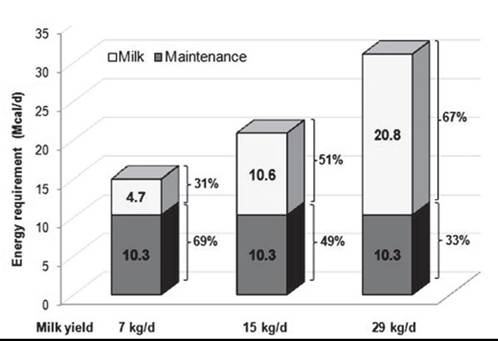
FIG. 41.31 The “dilution of maintenance” effect conferred by increasing milk production in a lactating dairy cow (650 kg body weight, 3.69% milk fat). (Adapted from Capper JL, Bauman DE: The role of productivity in improving the environmental sustainability of ruminant production systems. Annu Rev Anim Biosci 1:469-489, 2013.) as rbST relate to the improvements in efficiency of nutrient use and the related environmental impact. The improvement in productive efficiency with rbST use is a consequence of the “dilution of maintenance,”80’81 a concept illustrated in Fig. 41.31, in which the nutrient requirements of cows at different production levels are compared. A portion of consumed nutrients is utilized for maintenance; this represents a fixed cost for the cow to live and carry out normal functions. Additional nutrients are required for the synthesis of milk, and this represents a constant quantity for each increment of milk. Thus, nutrient requirements increase as milk output increases, but the fixed costs of maintenance become a smaller percent of the total requirements as milk yield increases (see Fig. 41.31). Likewise, rbST-treated cows require more nutrients to support their increased milk output, but the proportion of total nutrient intake used for milk synthesis increases and the proportion for maintenance is reduced.5,11,80 To illustrate, consider a dairy herd of 250 cows producing at the 2017 U.S. average per cow; if rbST is used, the same herd milk output can be achieved with only 227 cows and it requires less feed, less waste, and less young stock for replacements. Alternatively, if herd size is maintained at 250 cows, the use of rbST will result in the herd's annual milk output increasing by over 275,000 gallons. Overall, the net effect is the carbon footprint for production of a gallon of milk is reduced by approximately 9% when rbST is used.82,83 All food production has an environmental impact. Both producers and consumers gain when the environmental costs of food production are reduced. The environmental benefits of using rbST have been enumerated in national reports by USDA and EPA, as well as a series of scientific publications.84-90 The preceding paragraph highlighted the value of rbST use for a producer herd, but the environmental benefits are particularly impressive when considered more broadly. Table 41.12 illustrates the impact if rbST is used to produce 20% of the 2017 annual milk output by U.S. dairy farms.The environmental benefits of using rbST include reductions in animal numbers, feedstuffs, water and cropland requirements, manure and animal waste outputs, and inputs of fossil fuels and electricity. Overall, the use of rbST allows the U.S. milk supply to be produced with a lower greenhouse gas and a reduced carbon footprint. To provide perspective, in this example, the reduction in carbon footprint with rbST use is equivalent to removing more than 475,000 ■ TABLE 41.12 Environmental Impact of Using rbST-Supplemented Cows to Produce 20% of 2017 Annual Milk Production3,5
aTable constructed by R.A. Cady based on methods detailed in references.81,82 bBased on U.S. average calving interval, days dry, 63-day start, 14-day injection interval, last dose before anticipated dry-off date. USDA-NASS Quickstats. Available at: https://quickstats.nass.usda.gov/, Accessed 20 February 18.
autos/year. Furthermore, the gains in productive efficiency and environmental benefits from the use of rbST are similar and additive to those occurring with improvements in management practices and related technologies that increase the milk yield of dairy cows. Overall, these gains play an important role in the sustainability of the dairy industry. Human Safety The human safety of rbST use was extensively evaluated.When considering the human food safety of bovine somatotropin, the FDA considered the “general nature of protein digestion and absorption in adults and neonates, the effects and mechanism of action of growth hormone, its effects on other growth factors and the potential for biological and oral activity in humans.”18 Thus, oral gavage studies of both somatotropin and IGF-1 were conducted. Relative to the maximum exposure of a 10-kg infant, oral gavage doses of rbST and IGF-I were 50,000 and 200 to 2000 times greater, respectively.18 In both cases, there were no detectable effects, which strongly indicates that any metabolites produced and taken up across the gut were not active. In agreement, a study where rats were dosed with bovine somatotropin at daily intakes from 0.04 to 4.0 mg per day demonstrated that no detectable immunoreactive bST was identified in serum of these rats.15 Other evaluations included a Technology Assessment Conference by NIH,84 an FDA publication in Science,18 and reviews by relevant scientific societies and national medical associations.92-95 All concluded the use of rbST presented no health or safety concerns for consumers. The human safety of milk from rbST-treated cattle has been established by 56 countries and reviewed three times by the Joint FAO/WHO Expert Committee on Food Additives (JECFA).68,96,97 In all three reviews the JECFA declared “rbST can be used without any appreciable health risk to consumers” and that there was no need to set an Acceptable Daily Intake or Minimum Residue Level for rbST.68,97,98 There is no test to identify milk from cows supplemented with rbST, and there are no biological or nutritional differences between milk from rbST-supplemented and unsupplemented cows.68,90,91 The most recent re-evaluation was in 2014, when JECFA reaffirmed that advancements in somatotropin biology and over 20 years of commercial use provides no evidence of any health concerns or safety risks for humans.68,96
More on the topic Bovine Somatotropin:
-
Veterinarian -
|