RULES OF EXPERIMENTS ON ANIMALS
Similar to humans, animals are capable of perceiving external stimuli, which means they can experience discomfort and perhaps suffer. It is difficult to measure an

FIGURE 26.7 Coronary stent implantation in a Porcine model at Frontier Mediville.
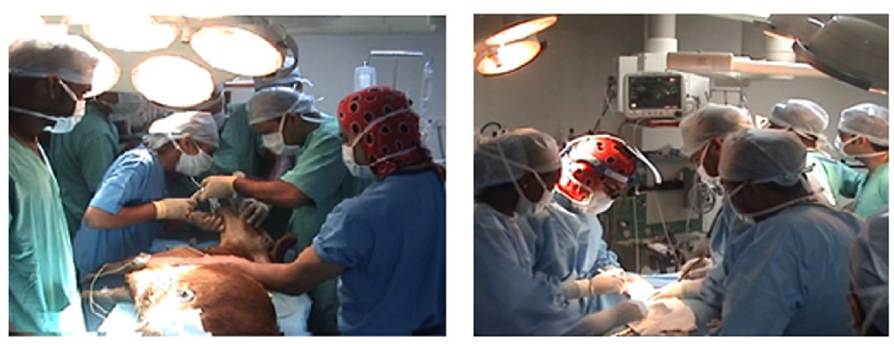
FIGURE 26.8 To assess the efficacy of an indigenously designed mini heart-lung machine in a sheep model at Frontier Mediville.
animal’s level of suffering objectively, although it is generally acknowledged that vertebrates - especially mammals - struggle with some degree of suffering. Consequently, the experimenter has a fiduciary duty to prevent suffering from the subject of the experiment or, in the event that it cannot be avoided entirely, to minimise it. The body overseeing animal welfare has reviewed and authorised all of the practical’s experiments.
The following considerations need to be made while organising and carrying out animal studies.
• Animals utilised in research should be fed correctly, housed in suitable conditions, and given the required social interactions. Veterinary treatment should be provided by professionals to sick animals.
• The academic background and experience of the researchers and educators supervising the experiments should be suitable, and they should be knowledgeable about the bioethical concerns surrounding animal experimentation.
• The duration of animal tests should be minimised;
• Muscle relaxants without general anaesthesia should only be used if pain elimination is also guaranteed;
• The experiment must have a strong scientific foundation.
• Only establishments authorised by the relevant authorities may conduct animal experiments,
• Adhere to the three Rs of humane animal experimentation:
• Reduce the number of animals used in tests.
• Attempts should be made to replace animal experiments with tissue cultures or microbiological preparations.
• Experiments should be refined to reduce the pain and discomfort that an unanaesthetized animal must undergo without the ability to avoid it.
• Experiments may only utilise animals obtained from an official supplier or locally produced; however, captured wild animals may also be used in some cases. However, conducting studies on stray individuals of pet species (dog, cat) is strictly prohibited.
Authors of scientific journals must provide a declaration confirming compliance with animal experimentation laws and regulations. Manuscripts detailing experiments where these principles were ignored or violated should be rejected.
26.10
More on the topic RULES OF EXPERIMENTS ON ANIMALS:
- Overview of Foreign Animal Disease Investigation and Response
- Bovine Tuberculosis
- U.S. Department of Agriculture National Veterinary Accreditation Program3
- Molecular Testing for Infectious Diseases in Horses
- Collapse Versus Sudden Death
- Euthanasia and Slaughter
- Monitoring
- Adnexa
- Diagnosis
- Clinical Examination of Goats